Showing posts with label discipline. Show all posts

Thursday, August 1, 2013

When You Don't Homeschool...

... can you still hold tight to your ideals? Can you raise unconventional children in a conventional environment, in this case that being public school?

Well, I certainly hope so. That is, I'm working on it.

Overall, I love the public school my kids attend. There are various issues, some being school-wide, and others being city-wide (and thus harder to take on--not that I'm not trying!), as there are in any school, but so far we've been very fortunate and my two older children have had largely positive experiences.

As a family, we do some things differently than many of the families in our neighborhood. As a member of the "natural parenting" community, I see a great deal of blog posts and articles all about homeschooling and its benefits. I know them well, as I homeschooled my son before he attended Pre-K. My husband and I both value public school education, and we like the fact that our children have other authority and mentoring figures in their lives--we think of it as part of the "it takes a village" mentality.

Since I don't currently homeschool, I've often wished that I could find resources on how to continue to parent the way we do while our kids are in an environment that is, at times, very different, if not completely opposite from the one at home. After three years of parenting children receiving public school education under my belt, I've made some discoveries on what works for us and I'd love to share them with you.

First and foremost, know your child. I have two typical, active, social children, and neither of them require any special services. They are adaptable and adjust quickly to change, and they are not intimidated by the size of the school, nor the number of students (1400! Though I have to say it doesn't really feel that way). Our school is a good fit for them. Children's needs vary. Some may flourish with a busy, active pace, while some may need a smaller, quieter environment. Don't automatically rule out a large school, but don't assume your child will adjust, either. If you are a free range parent, be aware that children in typical public school are expected to line up, sit down, stand up, and the like, pretty much by the end of Kindergarten (it's really not that bad. But again, it's all about your child, and your personal beliefs about learning and teaching).

Make friends. With your child's teacher, that is. We all hear teacher horror stories, but in my experience, the vast majority of educators are wonderful people who care about children and like (if not love) their job. One of the best things I've done for my kids has been to get to know their teachers. I keep up correspondence in whatever way is appropriate and accepted, and keep the lines of communication open. Since I sometimes have requests or questions that most other parents do not, being friendly is a must. If a teacher goes above and beyond to work with my child, I make sure he/she knows I appreciate the extra attention. And if my children are involved in a discipline issue, I make sure I am receptive and not defensive. Nothing turns a teacher off more than a defensive parent who seems unwilling to listen to constructive feedback.

Get involved. Admittedly, this can be difficult, if not impossible, if both parents work. I have to say, though, there is no better way to find out what's happening in your child's school, and in their classroom, than investing some time there, no matter how minimal it is. Parent teacher conferences are a great way to start, as are curriculum days and any open classroom days that your school might have.

I am on our school's PTA and it is absolutely invaluable for me and my children. I am in the building several times a week and have gotten to know the administration, as well. This gives me the opportunity to bring to light issues that I would like the school to work on, and allows me to even tackle some of them along with a wonderful group of parents who are also devoted members of the PTA. It's a sincere privilege. If joining the PTA or volunteering time seems impossible, start an email list with other parents in your child's class, and keep communication going that way. Other parents are a great resource. I have gotten much useful information just chatting at pick-up.

Unless the school has a food co-op or a kitchen that makes fresh meals, make your kids' lunch. The NYC Department of Education tries, goodness knows--but the meals are still not things I would feed my children on a regular basis. For one, they are not prepared on site, and they are mass-produced. There is a huge healthy eating initiative going on right now, and though I appreciate the effort, that food cannot possibly compare to what I make at home. With all the focus we put on healthy, organic food, it would be impossible to accept school lunch for my children.

Don't let school supply lists or teacher requests intimidate you. When my son was in Kindergarten, it was requested that we send his snack and lunch in brown paper bags and ziplock bags. I sent a note kindly explaining that as we were trying to reduce waste in our household, all of the containers and bags we sent our son to school with were reusable, and were not to be thrown away (and this will certainly be the case for my daughters, as well). LunchBots, KidsKonserve and LunchSkins are all companies that sell reusable lunch supplies.

Each year's school supply list requests Purell sanitizer, a conventional cleaning spray, and Huggies baby wipes, and I stubbornly send in BabyGanics hand sanitizer and Seventh Generation cleaner and wipes. I'm thisclose to sending in a homemade cleaner, next!

Choose your battles wisely, and fight fervently.
There are certain things, like slowing the curriculum pace or shortening the school day, that are pipe dreams, and I've learned that it's best to focus on things that are feasible for the school to change or improve, like amount of physical activity the children receive, activities and fundraisers to promote spirit and unity, and various other concerns where a solution seems attainable. This isn't to say that the big fights shouldn't be fought, though. Just this past year our school won a huge battle with the Department of Education, and it was one of our community's finest moments.

Don't let your child become another brick in the wall. Our school makes a great effort to make its students feel attended to and looked after. I've never been made to feel like my child is just one among the crowd. At the same time, there is a certain amount of group activity inside the classroom and out, and there are certain expectations that are placed on the children in terms of following directions and receiving instruction (if only for safety and the sheer mass of children going anywhere at a given time. Lunch periods boast over 400 kids in one space). As long as the children are treated respectfully and are given positive reinforcement, I don't take issue with that. Here is something I'm attempting to tackle: the lunch aides in particular leave a lot to be desired in terms of how they approach the children. My goal is to meet with the principal and talk about giving the aides further tools to positively discipline the kids without incessant yelling or unreasonable punishment.

When it comes to the instruction your child receives in the classroom, be as involved as you can with the teacher to find an approach that works for your child, the teacher, and the class as a whole. Whatever the concern is in your school, be it academic or otherwise, speak up and make your voice be heard. You are your child's best advocate. Don't assume anyone else will fight for him/her.

Stay strong--you and your children both. We are living in an age where seemingly every person in civilized society has a gadget and/or is on some type of social networking site. I share a fair amount online and I have a love/hate relationship with social networking, and I don't think it's appropriate for my children. My eight year old son asked me what Facebook was the other day. As I explained it to him I made sure he understood that in our family, at least, that kind of activity is reserved for adults. He also asked me when he would be able to get an iPhone (my answer was, when he's old enough to work and pay for it himself. Same for my girls. That's just the way the cookie crumbles). It's worth noting that many people we are close to and care about make different choices for their kids when it comes to this, so it's important that I reserve criticism and not come from a place of judgment, rather point out that these are our family's choices and what we believe is acceptable.

Along the same lines, my kids will ask for certain food, toys or activities that they see other children getting or engaging in. Once again, I do my best to reserve criticism--even more so since we talk a lot about people being created different, but equal. I have to accept that as many positive things as my kids are being exposed to, there is plenty of negative exposure, as well. and  I simply explain our family's beliefs and reiterate why we choose to live the way we do and consume what we do. It gets harder as our children get older, especially as they approach the age where insecurity sets in, and they just want to be liked. Going against the grain gets tougher and tougher. To that end, I try and instill in my kids a strong sense of self. I want them to be independent, confident and steadfast in who they are--and of course, that starts with me.

Come September, I will have two kids in school all day, with only my little one left at home to brainwash—er, parent and teach. My hope is that all my children will take with them the good lessons and learn to ignore the bad.


Monday, November 26, 2012

My Spirited Child

Oliver; my spirited child
Photo Credit: Ali Lauren Creative Services

The term 'spirited' hadn't really entered my life until very recently. Before I had the term I had words like 'willful', 'quirky', 'difficult', 'high energy', 'particular' and 'Pain-in-my-ass'… Not very 'motherly' that last one but for real; anyone who has or has met a spirited child knows that they push you and sometimes no amount of flowery language will do. 

"The word that distinguishes spirited children from other children is more. They are normal children who are more intense, persistent, sensitive, perceptive, and uncomfortable with change than other children. All children possess these characteristics, but spirited kids possess them with a depth and range not available to other children. Spirited kids are the Super Ball in a room full of rubber balls. Other kids bounce three feet off the ground. Every bounce for a spirited child hits the ceiling." - Mary Sheedy Kurcinka, author of 'Raising Your Spirited Child'

My son, Oliver, is spirited. Unlike what many have tried to suggest over the last few years he is not spirited because I held him too much or let him sleep in my bed; he isn't spirited because I don't use time-outs or force him to share or threaten him with consequences unrelated to his actions. On the flip side he isn't spirited because I didn't hold him enough, or removed him from the family bed too early, or because I am not the docile loving gentle parent we'd all like to be 100% of the time. He has ALWAYS been spirited. Only when he was a baby the word we used was 'high needs'. 

This is the hardest thing to acknowledge and accept when you start to realize that your child may not be just like any other kid his age, that he won't be easily cajoled or managed into things the way all of your friends kids seem to be, that the friendly tips your family share with you will never work for your child even if they've worked for two dozen others without fail, that he won't just take your word on anything from food to the direction of the park no matter how reasonable an argument you make or how many 'limited choices' you give him. When you start to realize that he is 'more' it's hard not to feel like they may actually be 'broken' in some way and because we live in a society which idolizes the 'good mother' and blames everything on the 'bad' one it's hard not to start wondering if they might be 'broken' because of something you did. 

I am starting to accept it now, though. Oliver is spirited. He has ALWAYS been spirited. This is who he is and he's NOT broken. He's occasionally a pain in my ass, but he's really truly not broken, and instead of feeling bad like something I did made him this way I should be proud of the person he is and will become. 

Spirited children have a lot of qualities that make them difficult to parent but those same qualities are ones that our society values quite a bit in adulthood: focus and determination, individuality and independence, assertiveness and leadership, creativity and confidence. But sometimes all of that determination, independence, assertiveness, creativity and confidence is being perceived by myself and the outside world as a stubborn, uncooperative, aggressive, mischievous, and entitled wild child; I often fear that underneath those perceptions the other qualities Oliver has like empathy, sensitivity and generosity are being missed. 

So I am starting to learn that the best way to parent my spirited child is to forget about immediate behaviour results and instead find ways to help Oliver channel his energy in positive ways. I need to stop comparing him to what other kids his age can manage and respect that he can handle some situations better than others. I need to let go of the pressure I feel from people on the outside to be in 'control' of my child's behaviour and allow him to live and learn while working on ways to set him up for success in his own way.

"Motherhood is about raising and celebrating the child you have, not the child you thought you would have. It's about understanding that she is exactly the person she is supposed to be. And that, if you're lucky, she just might be the teacher who turns you into the person you are supposed to be." -Joan Ryan 

For anyone else who may be wading (or drowning) in what it means to parent a spirited child gently I've compiled a short list of tips that have helped US live more harmoniously together. There are definitely bad days, there are definitely days where I panic that nothing seams to be 'working' and where not-so-helpful suggestions start to make me doubt myself. Nothing about raising kids is easy and with spirited children it's, well, MORE so. But there are also good days; days where he lets me in on moments of absolute joy and beauty at exactly the moment where I am most receptive to them, days where he has me in tears laughing with his wit and charm, and days where we just seem to click and tune into one another and I start to feel like maybe I am doing something right after all.

Energy: 

The most identifiable mark of a spirited child is their energy. It is seemingly never ending. But it does end at some point and when you get to the end of that energy their ability to cope with their big feelings is almost non-existent. The key is to find balance. 

Spirited kids need an outlet; if they're gross motor oriented like Oliver they need time to run, jump, swing, dance, climb, and yell. If they are fine motor oriented they need time to sort, draw, build, stir, scoop, squish and pinch. But it is also important to recognize where they get their energy from. 

You may have heard the terms 'introverted' and 'extroverted' before but I find many people don't really know what they mean. These terms basically describe where we get our energy from; if you are extroverted you get your energy from people around you and feel drained of energy when you are alone or lacking social stimuli for too long, if you are introverted you get your energy from being alone and feel drained of energy when around people for too long. It is the same for our children. Be sure they aren't spending too much time in situations that could be draining them of their energy and limiting their ability to cope with all the 'more' they have.

I find the best way to balance energy is to try and set a healthy rhythm of energetic release and restful energy recharging; every burst of energetic activity is followed by a mellow 'cooling down time' before starting to ramp up for another energetic activity. For Oliver, who is very social but undoubtedly an introvert, that also means making sure not to over-schedule his social calendar and planning for lots of quiet one-on-one time or recognizing and respecting when he doesn't feel like talking. 

Focus: 

I am often asked what the difference between a spirited child and a child with ADHD is and the short answer is focus. True ADHD means that the child receives stimuli from their environment the same way we all do but lack the ability to choose which of those stimulus is most important to focus on let alone focus on any one thing. A spirited child can and does focus on the most important stimulus, they just may not agree with you about which one is most important in any given moment, and once they're locked in there is no distracting/deterring/redirecting that can get them to let it go until they're ready. (I have a theory that many children diagnosed with ADHD by the educational system may actually be spirited children trapped in a school system that cannot meet their needs. but that's a personal opinion so moving right along…) 

When it comes to keeping the peace with a spirited child I find the best thing to do is to work with this focus as much as possible. If your child has trouble staying on the task you set out for him because he is too focused on the 'beat' of the dish washer it will not kill you to take a moment to show interest in what he's found before trying to lay out your task again, it may even allow you to tie your task in with your child's reality. (example from today: "Wow, that tree branch does look like a dragon's tale! Let's put on your viking boots and go check it out!") but most days you'll find it's easiest just to wait until their attention drifts back to you. Also try planning extra time around things like getting dressed in the morning or arriving at or leaving places so that you can give transitional warnings or count downs and don't feel pressured to rush them along. 

The transitional warnings or countdowns are important. I may have been exaggerating (but only a little) when I said that spirited kids will not let something go once they've focused on it. They will, some spirited children just need to be gently eased from one thing to another. There is no stressor greater to a spirited child (mine anyway) than sudden unexpected change. Talk things out, tell them what to expect, keep reminding, and be ready to reassure them if all the '2 more minutes' in the world won't ease the hurt of leaving the baked-goods section of the grocery store. or ya-know, whatever they're into that day. 

Independence: 

All kids have an independent streak at some point in their lives or several to some extent but, as is the definition we're working with here, spirited kids just seem to be 'more' independent. For me this is the hardest trait to cope with because massive amounts of independence for such a small child comes with equally massive amounts of mess, frustration, and tears (his and mine). I really push myself to recognize and accept when Oliver needs me to back off and on days when I am better at spotting this need we are both much happier. 

Set up your home to accommodate your spirited child at their age and stage. If you read any Montessori resources or blogs you'll find a lot of great ideas for doing this but here's my short list:
Step stools everywhere, only safe items within sight/reach, clothes where they can reach them and pick them, water cups where they can easily fill them, snacks within reach, and brooms and rags where they can get to them (because god forbid you step in to mop up the entire jug of milk he just tried to pour himself, that would be insulting.)

Also remember that everything you do within sight of your spirited child is fair game for them, think of ways they can help because spirited children are so independent that they actually reverse the usual parent-child helping relationship. Trust me, no matter how strong and capable you are, you need your spirited child's help. (or so i've been led to believe)

By making a lot of room in your life for this independence to blossom you will avoid power struggles and give your spirited kid the confidence, control, and responsibility they need to flourish. The word 'uncooperative' used to enter my vocabulary a lot when it came to Oliver but since letting go and respecting his need to do things (all the things!) for himself I have come to realize that he's just eager and independent and there's nothing wrong with that. 

On a more serious note this independence can get a bit scary when it comes to safety. Make sure that you have firm boundaries as to what they can and can't do for themselves. For example Oliver can walk ahead or behind me on the sidewalk but he MUST hold my hand to cross a street or parking lot or he will be carried. Spirited kids will resist these boundaries, they will test them repeatedly so stay close, practice lots, and make sure you are firm for as long as it takes for them to get into the habit. 

perceptiveness and sensitivity:

I often describe some of Oliver's 'quirks' to outsiders as 'sensory issues' since that's the buzz word that people seem to know. I am not discounting that this may actually be the case (we haven't 'officially' looked into it) but it is really common for spirited children to have a hard time coping with certain sensory stimuli. Because spirited children are 'more' perceptive and sensitive than most children it leaves them open to becoming easily overwhelmed. 

I come at this from two sides. First I try really hard to make sure that our home is comfortable for him. We keep radios and televisions on low when they are on but try to keep them off as much as possible, we make sure the lighting we choose is soft and non-irritating, we let Oliver pick clothing and bedding that pass his standards for being 'not scratchy', I only run the washer and dryer when he's sleeping or out of the house because the 'whirring' bothers him and I've stopped using scented products to clean our home or even for my own hygiene because I know it bothers him when things 'stink'. I want our home to be as comfortable for him as it is for us. But I am also working on helping him learn to cope with feeling overwhelmed. 

Here's the kicker to this one though: I may or may not be a little bit 'more' in this department as well so sometimes if there is a sound or smell or bad lighting situation that is overwhelming Oliver chances are it's setting me off as well. Sometimes the best I can hope for is to model an appropriate way to deal with the extra stress, other times I am able to walk him through it. We do a lot of deep breathing and humming, sometimes if we can we find a wall to put our backs on and close our eyes for a few minutes, or duck into a washroom or step outside for a breath of air. find out what seems to set your child off so you can avoid adding stress and come up with ways to cope (that are portable! that's important! this rarely happens at home in our controlled environment) that you can help your child with but that ultimately they will be able to use themselves when they need to. 


There are several other things that can make spirited kids tick, some of which may be surprising to you, I have only listed the ones that a) effect our family the most and b) I have come up with manageable solutions for coping with. If you are struggling, or just curious, I highly recommend the book quoted at the top of this post "Raising Your Spirited Child" by Mary Sheedy Kurcinka for learning to better understand how you can help guide your child through the world being 'more'. In conclusion if all you come away from this post with is that your child is normal (in her own way) then I feel like I've gotten my point across. If you have experience raising spirited kids please comment below and lend some support for those of us who feel in over our heads half the time!  


Tuesday, November 13, 2012

Guest Post - Eight Ways to Get Kids to Listen


Today I am so pleased to be able to share a post from Chaley-Ann Scott, the amazing woman that wrote the article on Unschooling in The Mother Magazine. 

Chaley-Ann Scott, BA (Hons), IIS, ISA, is a sociologist, writer, parenting counsellor, and mother-of-four. She is a contributing editor to The Attached Family (Attachment Parenting International magazine), and a regular contributor to Mothering, Nurture, The Green Parent, The Mother, The Child, Kids on the Coast and Otherways. Her first book, The Shepherdess: A Guide to Mothering Without Control,  is available in all good bookstores or online at www.wombatbooks.com.au or www.asktheshepherdess.com.

***************

A parenting complaint I hear time and again in my practice is that 'the kids just won't listen'! So what do you do when you have tried explaining, reasoning, reminding, distracting, ignoring, punishing, shaming, bribing - and even begging - but nothing works. Have you just got a 'bad egg'? A future deviant? Is there no hope for your little monster? Don't worry, help is at hand. Shown below are some proven techniques I have used with many families, including those with children who have been diagnosed with ADHD, ODD, and Aspergers.  They get parents to really start thinking about why their child isn't listening to them, and how they can turn that around and restore peace to their home. 

1. Listen to Them

If you want your child to listen to you then you first need to start listening to them. By this I mean REALLY listening, both to their verbal and non-verbal language. Are they out of sorts? Are they overwhelmed, frustrated, unhappy with something? Don't put them in situations that they can't handle just because you feel they 'should' – if they don't like shopping then find a way to do it without them, if they struggle in big groups then avoid those, if they don't like strangers talking to them talk for them, if they become fidgety in restaurants only use drive-thru's or take-aways. We wouldn't dream of forcing a friend to a concert if they hated loud noise or crowds, so why do it to our children? Help them navigate and figure out their world in comfort and, when you miss the early signs that they aren't happy then respond gently. Punishing or ignoring our child when they have a loud emotion (ie.what many parents describe as a 'tantrum' or a 'meltdown') is an opportunity to apologise to our child that we didn't notice they were uncomfortable, to find out what is behind their behaviour, and to try to fix what is often an unmet need.

2. Be Reliable

Do you always say what you mean with your child? Do you make a plan and stick to it? 'I won't be long', 'I'll bring you some cake home today', 'You can watch that tomorrow', 'You can have that after dinner' – typical, seemingly innocent 'promises' that we fully mean at the time but end up breaking because we are busy or our minds are elsewhere. However, to a child, breaking these 'promises' erodes trust and eventually they will stop listening to what we have to say.

3. Be Honest

Are you someone who is always honest with and around your children? Do you ever knowingly tell them 'white lies' to appease them like, 'We'll come back tomorrow' , 'We'll get that game another day' , 'I have no money in my purse right now' , 'Tell the lady I'm not home', 'The shop was closed', 'Don't tell your brother I got you that'? Those little lies build up and, children aren't stupid, they work out quickly if mum and dad are people who tell lies or people who have integrity. Why should they listen to someone who doesn't always tell the truth? Would you?

4. Be Accurate
Motivated by our fear that our kids will get hurt, we tell them all sorts of things and present them as fact just to get them to comply. 'You will fall if you go any higher', 'If you eat sweets your teeth will fall out', 'McDonald's is poison and will make you sick', 'That movie will give you nightmares', 'Video games fry your brain', 'Smoking will kill you'. When these 'facts' turn out to not be true, but just a matter of opinion, mum and dad will become a less sought after source of advice. That can be pretty dangerous when they then turn to peers for advice in their teenage years. By all means, share your views on certain things with your kids but, if you want them to continue listening to you, be wary of scaremongering and giving advice as 'fact' – state your case as your opinion and help them explore other people's viewpoints and their own.

5. Be Playful

Playing with our kids, especially side-by-side activity, is a great way to get kids talking. And, as we have already discussed, the best way to get our children to listen to us is to listen to them. Don't expect them to join you in your world doing things you like, but join them in theirs. What do they love? Why? Get engrossed in their latest game, book, sport, craft that they love, in their space, and share it with them and watch the communication just flow.
 
6. Reduce the 'No's' and Find the 'Yes's'

If someone said no to your requests numerous times a day how would you feel about that person? Would you feel like complying when they asked something of you? No, neither would I. If your child requests something that isn't agreeable to you (for non-arbitrary reasons) then rather than providing an outright no – try and 'find the yes' and offer acceptable alternatives to both of you. This shows you are really listening to them, and are trying to help them. For example, if your child wants a toy and you can't afford it, rather than say an outright no you could say, 'Sure, let's put it on the wish list and work out ways we can buy it'.  Do you have anything you can sell or trade? What about a second-hand one? Let's work out ways we can save up for it'.  Showing them you are always trying to find ways to help them to get what they want will strengthen their trust in you and ultimately improve your chances they will actually listen to you.

7.  ‘No’ is an acceptable answer

So many parents say to me 'yeah, but sometimes I really do have to say no and when I do I need him to just listen'. This may be a 'No!' or 'Stop!' to serious issues such as hitting a sibling, swearing or screaming in public, or doing something seriously dangerous. Often these can be avoided by being fully present and mindful of the situations we put our child into, but not always. When it does happen it is far more likely our child will listen to a firm 'no' or 'stop' if they are few and far between, and we ourselves accept it when they say 'no' to us. Contrary to popular belief, it is not disrespectful for a child to say ‘no’ to a request from us - quite the opposite.  It shows they trust and respect us to be honest, and don't just blindly comply with our wishes.  And, the more we respect ‘no’ from our child, the more likely our child will respect a 'no' from us.  The other added benefit is that when they do say yes, we will know they have not done it through fear but have been intrinsically motivated to do so. 
 
8. Be informative

If you follow all the above steps with your child, you will eventually find that providing them with information, feedback, and advice - rather than demands or orders - will result in them listening to you. However, don't always expect them to comply with your request – just as you do with them, they may say no but suggest acceptable alternatives to you both. These techniques will not produce a compliant child, and nor should you want them to, but it will help to produce a reasoning, thoughtful, free-thinking child that has a strong connection with his/her parents, which is something we should all be striving for.

Friday, October 19, 2012

Attached Parenting isn't about Better Kids

I'm going to let you in on a secret. I do not try to use gentle discipline and attached parenting ideas because I think my kid is going to turn out to be better than anyone else's. Sure, I read the blogs and the articles about how attached children are more empathetic, are better at problem solving, etc., but, truthfully, I feel like however my son ends up as an adult will be more of a reflection of who he has always been and the choices he's made about himself than who I have "made" him. He is responsible for his own choices, good or bad, and although I am trying very hard to demonstrate how to make good choices and what good choices look like, I know that I will never be able to make his choices for him. Only he can decide who he will be. I'm just here to try to shape his ideas of what that can look like and to give him the love and safety he needs to explore who that is. I am perfectly aware that there is the distinct possibility that no matter how ultimately successful I am at trying to gentle discipline/attached parent my child, he might not turn out better than anyone else's child and I'm okay with that.

In my former, pre-mom life, I used to work in a school with children with emotional and behavioral issues. These children were all on IEPs and most were in need of basic social skills learning. (For example, lessons included: here are the steps to use to respond to positive feedback, here are the steps to giving negative feedback, here are the signs you are feeling angry, scared, etc.) Again and again, as part of an amazing staff there, we worked to help the students learn that no one could "make" you angry or make an unsafe choice. You can do nothing about another person's choice, you can only make your own choices when you respond and hope that they choose to respond to you by making better choices of your own. You are never responsible for another person's behavior, but you are responsible for all of your behavior and your reactions to others. It is a lesson that I have definitely carried into my parenting escapades.

So, here's the truth: my wonderful, beautiful son who was worn constantly, still sleeps with us, whom I have really tried to gentle parent as much as I can (I do make lots of mistakes, though, and lose my temper from time to time) is a typical three year old with behavior identical to most three year olds. My son yells, he sometimes makes dangerous choices like trying to pull down his bookshelf full of toys last Saturday because he was mad his dad was leaving to go to a football game, at a friend's house a few months ago, he got into a brief scuffle with another gentle parented 3 year old and threw wood chips at him instead of resolving their differences peaceably, last Sunday he kicked over a pumpkin instead of getting into a picture with the other grandchildren at his grandma's house, and last night, inexplicably (he seemed to be in a good mood), he approached his dinner plate as if he were going to get in his chair and eat and then threw his dinner on the ground and intentionally smeared the ketchup on the floor.

This is a good time for me to point out again. .. I am not responsible for my son's behavior. =o) However, I am responsible for making him understand that he is responsible for his choices and their consequences. I am responsible for my responses to his choices and my own behavior. That is why I try to use relationship based parenting and that is why I use tools like "the comfort corner," framing behaviors as "good/bad choice" and try to keep my relationship with my son primary . . . even when I'm feeling helpless and like this "gentle discipline" thing has failed; my child is a mess! The thought that "this isn't fair; I'm doing everything right and it isn't working" does cross my mind from time to time, but then I remember that this really isn't about him right now. It's about me and my choices and who I want to be as a mom. I don't like myself when I give into anger and yell and behave like a crazy woman. I don't respect myself when I make crazy choices like behaving petulantly toward my own three year old (as if THAT is going to be effective). Raising a child is not the same thing as "making" a product. What you and I are doing today may not have immediate, tangible results. We can only hope that by showing our children how we take responsibility for our own actions and choices, by teaching them the agency of their own actions, and by providing them with the best loving relationship we can that they will choose to be the best people they can be all on their own.

I don't think I'm a better mother than anyone else I know. In fact, I spend a lot of time worried that I'm nowhere near as good as most the other mothers I know! I'm not trying to make my son better than anyone else's child. I'm just doing the best I can and that's all I can ask of him, too.

Thanks for Reading,
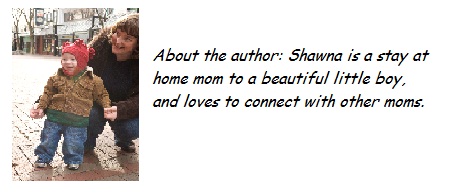
Shawna

Wednesday, August 8, 2012

Flexibility: The Ultimate Sign of Strength in Parenting

For my son's first birthday, my husband found a deal online that was hard to beat, a $100 ball pit/tent on sale for $25. We were thrilled . . . until we read the reviews of it online. It turns out the supports tended to break and most people thought the craftsmanship was not good for small toddlers because it was too delicate. The ball pit lasted throughout our first home, but by the time we moved less than a year later, we had to buy new supports for it. This time, we anchored it to the ceiling and replaced the flimsy, plastic rods with wooden dowels. Still, by the time we moved from that home into our new one this summer, we decided not to put it back up because we knew that the dowels were likely going to break under the pressure our growing son would put them through without the added rafter support we had in the unfinished basement of the house we were moving from.

Yesterday, I found a play tent on sale. Because my husband is gone camping/kayaking this weekend with his family. I thought it would be fun for my son and I to set up our own tent at home and "play" camp. The supports for this tent were very different then our ballpit/tent had been. They were made of many pieces of plastic curved over a thick elastic center. It actually is amazingly flexible. This was perfect because that tent is exactly the type of playstructure my son needs. It is rigid enough to keep the shape of the tent and provide him with the stability of an indoor/outdoor private space. Yet, it is flexible enough to bend when it needs to instead of snapping under the weight of his constant testing.

I think the tale of the two play structures is ultimately the perfect metaphor for what real strength in parenting means. Often, as our children get older and more vocal about how they feel we get frustrated by their inflexibility and their demands. Too often, we, in turn, sometimes feel like we have to be equally inflexible to "show them who's boss" or "to give them structure." Even I've found myself sometimes getting into silly power struggles with my toddler before I've made myself step back and ask, "Is this really a time for inflexibility? Is this really what I want to draw a line in the sand about?" I've found that if I ever feel foolish about "sticking to my guns," than that is my sign that I should probably find a way to compromise or back out gracefully. (As a matter of fact, when I find myself thinking whether or not I should "stick to my guns," I usually discover I shouldn't. "Sticking to your guns" is about defending your life and being willing to shoot down others. . . not the image I would ever want to use when thinking about my relationship with my beloved son.) I'm usually pretty honest with my son about it, even though I know that he is barely three and doesn't really understand everything I am explaining to him. Sometimes, it's just as simple as telling him, "You know what? I've been thinking about how you feel about this and what you've been saying and I think maybe I was wrong and you were right. It is important that you wear some clothes to the store, but if you want to wear the same shirt you've been wearing since yesterday morning, well, okay. Who is that going to harm? It doesn't have any food on it or anything. Just put on some pants for mama and your shoes." Even a toddler respects a compromise when he hears it most of the time and he chose to put on underwear, pants, and shoes even though moments earlier he was demanding to be allowed to go wearing his shirt and nothing but his shirt.

Like the tent frame, there are times when I have no problem being absolutely rigid and holding my shape without compromise. In matters of safety (like my son's food allergies or running in the road), I am completely inflexible. I compensate by remembering to be soft and tender in the way I respect his emotions even as I am telling him absolutely no. I find it's actually pretty easy to be geniunely sympathetic and still firm with my limits when it is a subject on which I know I am in the right about it. When I get the most upset, childishly rigid, and downright power struggly myself is in the situations that are a little more gray. Because I am not completely convinced I am in the right, I play a caricature of myself in which I am Mrs.-Bossy-Pants-I'm-Adult-You-Are-Child. My son does not respond well to that person, and honestly, I wouldn't either. After all, my support for my argument is as flimsy as the support for the crappy ball pit tent. It's so rigid, it fractures when challenged. When I am at my best parenting my son is when I mimic the balance of the new tent frame. I am rigid when he needs support, but flexible when he needs that, too. When I am open to remembering that my relationship with my son is not about who is boss or who is right/wrong, I find the real power in our exchange with one another. It is the power of our mutual love and respect. He is learning to respect my experience and my ability to be flexible when I need to be (and rigid when I need to be) and I am learning (out of love) to respect where he is at in his learning process and that he may have something to teach me about how to really be a strong person and flexible mother.

So, for all those mamas out there who are at the end of their wits with children who are too inflexible and who constantly start power struggles with you, I offer you a hug and all my love. I am there sometimes, too. Keep in mind that the best way to keep your "shape" is to sometimes bend a little when the stakes aren't very high and when the fight isn't worth it. I'm not saying to let them "win" or to "give in," but I am saying that it's okay to find a compromise where you both "win" and where no one has to "give in." You are the frame of your relationship with your children. The strength of your relationship will be in the way you are willing to bend in order to teach your children how to bend themselves. Remember, an old stick is easily snapped and irreparably broken because it has lost its flexibility. A new branch is almost impossible to break because for all its stiffness, it remains flexible and alive inside. Be that branch, even if it is an olive branch sometimes, for the good of your relationship with your child.

Thanks for reading,
Shawna

Thursday, May 31, 2012

10 Random Thoughts on Discipline

Tomorrow my husband and I and our three children will move back to the United States after two years of living in Europe. It will be a long travel day (understatement), no one is going to get much sleep, and it's highly likely (read: guaranteed) that someone (read: me) is going to lose it over something trivial at some point. I'm trying to consciously focus on being calm and in the present and taking things slowly. So far it's working because, well, we haven't gotten on the plane yet.

Anyway, this upcoming upheaval has me thinking a lot about my own discipline philosophy, and why gentle understanding and respect is always my goal . . . even when I'm stressed and screw it up. Following are ten random thoughts on discipline that popped into my head while mentally preparing myself for the transition. Agree? Disagree? Share in the comments.

1. Discipline should be (mostly) proactive, not reactive.

2. Connecting always trumps correcting.

3. If it sounds too complicated, it probably is. Don't make things harder than they need to be.

4. Realistic, age-appropriate expectations are essential.

5. Consistency is overrated. There is no one way that works best for every child, every time.

6. Amendment to #5: Physical punishment is never a good idea. Never.

7. If my own cup is empty, I have nothing left to pour out. It will affect how I relate to my children.

8. At least once every 24 hours I feel like I have it completely together as a parent and my kids are awesome and doing great.

9. At least once every 24 hours I feel like I am a complete loser and I'm ruining my kids and they are doomed.

10. Nearly everything that makes me feel crazy in the moment will not matter in ten years. or ten hours. or ten minutes.

For some wonderful positive discipline resources, check out the following:


Thanks for reading and have a blessed day.

Wednesday, May 23, 2012

What I Love about the Rough Toddler/Preschooler Stage

Whether it's called the terrible twos, the terrible threes, or some other words that describe how frustrating parenting a young child can be, we all know that at one point or another we will hit a wall with even the most gently parented and fiercely loved toddler or pre-schooler. In short, everyone has a rough patch with their kids. We wait for months and years to hear what our lovies have to say and to experience all of their thoughts and opinions and then, well, and then they start sharing. The good, the challenging, and even the ugly. Part of it is just the shock of encountering the unfiltered and unmitigated thoughts and feelings of another human being. As we matured into grown ups, we got used to the social niceties of others filtering their raw emotions and thoughts and when our children hit us full force with their stream of consciousness and emotions, it can be overwhelming. Our children, unlike our spouses, or our siblings, or our parents have trusted us with their every need, feeling, and whim from the very beginning. They don't know that just because they are old enough now to put it all into words, that we will respond to them any differently and yet, we do. Before a child can communicate in words, we see them as little humans, but we don't see them as completely distinct from us. Even their first words we often see as parrots of our own words, but when they can talk, cry, joke, and throw temper tantrums, they become scarily distant from us. For the first time, they become completely "other." They are unpredictable and that can be quite the test for us. However, no matter how strong my son's tempter tantrums have become (when they occur, which is thankfully rare right now), and however frustrating his new "maturity" and communication ability can sometimes make the day to day business of our house, I've also found that this "difficult" stage is really one of my favorites. Not because of the challenge exactly, but because of what the challenge means. You see, for the first time, I am being faced head on, not with who I think my son will be or how I predict he will be or even how I interpret him to be, but how he really is in his own words. I am seeing both the seeds of his success and triumph and the potential for his self-destruction, sometimes even in the same breath and I love him all the more for it, even as I struggle to keep myself from throwing up my hands and walking away. For example, he has a wicked bossy streak. He wants to plan everything and be in charge of every detail. He tries to direct everyone and everything from his parents, to the dog, to every other child he meets. This means that play dates can be challenging and it is difficult to make him understand that he cannot always be in charge (although it is a lesson that he is learning quickly). He also has a strong shepherding streak. Not only does he want to direct everyone, but he also wants to know where everyone is all the time and to take care of their every perceived need from his duckies (his favorite toys) to his cars (his current second favorite toys) to every relative in the vicinity. This makes for both some tender moments, like when he makes sure to feed his duckies when they are hungry and tucks them each into bed together, but also some very frustrating ones like when I can't find the car "family" he wants so he is throwing an outrageous fit because they "need" to be with "somebody" and they are "sad" and "scared" and "somebody needs to find them." He cried for a solid twenty minutes in the grocery store after I recently dropped off the dog at boarding before a family vacation. He was frustrated that I was not following his orders to either let him stay at the "doggie hotel" with our family pet or "go get her so whole family be together" (sic). (See how he's learning, he's picked up that I usually give him two choices so that I can maintain control while still giving him some autonomy and he's started trying to use that trick on me!) That's a brief example of some of his personality traits and how they add to day to day frustrations, but here's what I see beyond that. My son, my baby, (I'm realizing) is a leader and not just any leader, one with a strong compassionate and caring streak. This means that he has within him the ability to be exactly the kind of person who should be in authority. He has the means, intelligence and determination, not only to get people to do what they ought to be doing, but, also, to care for them at the same time and to take other's feelings and needs into account. These same traits that could lead him to be too bossy or to be too easily hurt by other's pain, if left untempered or unguided as they are now, could one day hurt him or undercut his own natural abilities, but if I work to give him the tools to shape them just right. . .well, wow, he is already showing signs that he is someone that the world definitely needs! I've learned to let go of the illusion that I can control my child and have instead embraced the idea that I can control my own actions and use them to teach him how to control himself. It requires a lot of deep breathing and letting go on my part which is really hard for me because I, like my son, have a strong bossy streak. However rough our days get and however often I find myself fighting both him and myself in these tumultuous toddler times, I will end this tough period with an even greater since of awe of who my son is and the strength of his spirit and self-determination (and my own). Perhaps, what we identify as our greatest challenges with our head strong, determined toddlers are also the root of our children's greatest strengths and the parts of our children's identities that they hold most dear and are, therefore, the parts that they are most resistant to let us shape. What's great about this period is that through these challenges, we glimpse what will be their (and maybe our) greatest triumphs in their growth if we can just hold on tight and continue to guide them, even when they are convinced that they can and should be guiding themselves. When times are their toughest, I try to hold on to that and, I'm finding, that, soon enough I do see a glimmer of growth and even deeper connection between us as parent and child. Thanks for reading, Shawna

Monday, April 30, 2012

The Frustrated Mom


A year ago this April, Lashanda Armstrong loaded her four children into her minivan and drove into the Hudson River. Her oldest son, aged 10, was the only survivor after he rolled down his window and swam to the boat ramp in 45 degree water. Her other children, ages, 5, 2, and 11 months all died.

By all accounts, Armstrong was a good mother doing the best she could on limited means and with limited emotional support. She was estranged from both of the fathers of her children and for all intents and purposes a single parent. She mentioned in passing to her children’s daycare provider that she was “tired and all alone.” After a fight with the father of her younger 3 children, it seems she felt even more so as that was when she piled all of her kids into the car and drove them down a boat ramp into the Hudson River. 

Armstrong’s story is tragic, and still, when the topic came up in parent discussions on playgrounds or over dinner, parents talked about it in that distancing fashion that we save only for the most uncomfortable of topics. By the distancing fashion, I mean, the “I can’t imagine doing such a thing” or “Who could do such a thing?” or “It’s unnatural. It’s irrational – the urge to kill yourself and your children.” (as if we were unclear or thought that suicide and infanticide were well reasoned, thought out and rational courses of action). It’s the judgmental distancing thing we do when we’d like to think that the kinds of people who do these kinds of things are a completely different species of human being than ourselves.

I saw this again this last week, when a Chicago mom, Michelle Feliciano, 23, was arrested on child endangerment charges after her 11 month old baby was found with multiple injuries including bleeding on the brain, a broken clavicle, marks on the neck, and puncture wounds on his feet from toothpicks. Feliciano explained the injuries; she said they happened in a “bout of frustration.”  Her oldest child, between the ages of three and four, is now staying with a relative, while her baby is in stable condition in the hospital.


The comments on Feliciano’s debut into the papers sound like the things I remember reading about in the history of the Salem Witch trials or a Dickens novel. Feliciano is an immoral monster who should be hung in the town square. She should be sterilized without her consent or anesthetic. Her crimes inspire even the most collected and enlightened of onlookers to think of the most barbaric and medieval of punishments.

Yet, Feliciano’s case, while profoundly disturbing, I think deserves some degree of compassion. She is another young mom trying to raise children on limited means. There is no mention of a father being present. While Feliciano had family close by and it was a family member who noticed that something was wrong when the 11-month old baby couldn’t hold his head up, Feliciano obviously didn’t feel like she could call them for help when she found herself frustrated.  In the moment, dealing with two children all by herself seemed so overwhelming, that somehow hurting one of them seemed to make sense.

Child abuse is inexcusable, period.  But to assume that Armstrong or Feliciano are unlike other people is a mistake. Rather, they reveal the shortcomings of all of us.

Parenting, as one of my friends says, is unrelenting. Consequently, it can bring out anger and frustration that most of us didn’t know we had. Despite being raised in an angry household where my parents often yelled (generally at each other), I didn’t consider myself an angry person. I didn’t usually yell or throw things or kick things or throw tantrums like people who were angry people did. Even when I had a child I didn’t do these things.  When I had my first child, if anything, my patience, compassion, and tolerance increased. But something happened after the birth of my second. Since the birth of my daughter, and the increasing independence of my son who is 3-going-on-15, I have found myself profoundly and ridiculously angry. By sheer coincidence, I have also found myself profoundly and ridiculously tired.

And, I beat myself up all the more because my children are happy, easy to be around, healthy little people. Unlike Feliciano and Armstrong, I am educated and not young (and not there’s anything wrong with young parents, though studies show child abuse drops as people have children later in life, but to be clear, to have more than one child by 25 – the age when our own brain just finishes its development – is young) and I am not trying to raise my children on limited means. My children’s father is an active partner and parent; we have a solid marriage with pretty great communication skills. We fight and yell, but we also love and laugh and keep talking. My sister lives around the corner with her awesome soon-to-be husband. When my husband works late, I can crash – with my two kids in tow - dinner at their house. Yesterday, I came home to find my almost brother-in-law in the backyard working on our chicken coop and watching my son play; my husband had to run out for a work call.  I also have help; we can afford a housecleaner and I have a nanny part-time, so while I get up insanely early to get work done, I also have a few hours in the afternoon when she comes. I have her help for whatever I need: she can hold the baby, while I hold my son during his allergy tests at the doctor’s office or his teeth cleaning at the dentist. 

For all intents and purposes, my parenting experience is at the complete opposite end of the spectrum from Feliciano and Armstrong. Nonetheless, I have had days since the birth of my daughter, where I felt emotionally and physically exhausted, drained, isolated, angry and even violently so. I have had moments where I have imagined doing terrible things to my children and myself and horrified myself. I have had moments where I didn’t know I was going to make it through the end of the day. I have moments where when someone said, “it only gets worse” I have thought, “well, then, I am not going to make it.” I have had moments where walking into traffic seemed like a reasonable course of action.  I have thought there was something terribly wrong with me.  I have felt hopeless; because my own parents were so angry, I have spent years working on my personal development, so I didn’t follow in their marriage and child-rearing footsteps. And as a result, I do live a very different life than my parents did when they were my age.

Then one day, my son asked for sliced cheese and when I gave it to him, he cried that he didn’t want it and without even thinking, I became my mother in 1976 and picked up the cheese and threw it across the room and into the trash and said, “well, then don’t eat it.” Horrified by the instantaneous transformation, I instantly picked him up, apologized and we cried together about how I scared both of us.

When I tentatively brought up the topic of my own parenting anger in a group of friends and my favorite fellow parents, I was worried I would get asked to leave. But nonetheless, I had to ask, “I know we all want to be gentle parents, or conscious parents or whatever the terms are  - I know we all want to be the parents our parents weren’t, but does anyone beside me ever just lose it?”

I wasn’t shunned. One friend said, it’s going to happen, and it’s what you do in the moments after that make the difference. I realized that this is true, that my own parents told me I had it coming, so I always felt wrong even if I wasn’t. Whereas my children and I ended our bad patches, with me apologizing, and us on the couch snuggled together and reading, that this had the effect of my outbursts passing like my kids’ outbursts. Once we expressed the emotions and accounted for them, we could move on without carrying grudges forward.

Another friend wisely said, “I think we have to be like Gandhi, where we just keep taking hits from the British.” Then she added, “But I don’t know that Gandhi was as tired as we are.”

So while I’d like to pretend I can’t fathom how people like Armstrong or Feliciano do what they did, I can; I have felt the emotions that lead to those kind of actions. And like them, and like my favorite friends, and like my wise-Gandhi-citing friend, I - and most of us - weren’t taught how to deal with frustration or anger. Many of us were actually taught that expressing anger or throwing temper tantrums was nothing more than being manipulative or trying to get away with something. But this only leads to bottling emotions up until we can no longer stand it and we explode, often taking it out on those around us.  Not many of us had parents that got down at our eye-level and said, “I get you’re angry and that’s a valid emotion. Do you want to talk about what makes you angry?...Oh? What else?” Most of us grew up in households where expressing emotions like anger was considered misbehavior.

Except that it’s not. Alfie Kohn famously writes that every act of misbehavior has at its core a valid complaint. The trick is to give kids – and ourselves – the skills to express that valid complaint in language. I know for myself that when I act out, I too have a valid complaint at the source, whether it’s that I feel unsupported or overwhelmed or that I need a break and am unable to put my children on “pause” while I take a nap. I suspect if we asked Feliciano and Armstrong if they had a valid complaint at the source of their “unthinkable” actions, we would find they did. I suspect we would find, that, in a country we consider advanced, they felt the struggles that come with not enough support.

We can imagine Feliciano and Armstrong as monsters or unnatural. Or we can consider that like many of us, they didn’t have the tools to handle the wide range of emotions that come with parenting. Like many of us, they found themselves overwhelmed with frustration.


Wednesday, March 14, 2012

Accepting the Mother I Am


Here's something that I don’t readily admit: I make a lot of mistakes with my children. I lose my cool, I bribe, I second-guess myself, and I clean my house while they watch TV.

I know my children well. I know when either of them needs a cuddle. I know that they don't like to be hassled and asked questions right when they wake up. I know my daughter will cry if the lights are too bright first thing in the morning; I know my son will be upset if we are out of his favorite granola bars. With nearly seven years of mothering under my belt, I know what my kids want without words; I understand their idiosyncrasies and habits like no one else. I know which cry means what, and I empathize with and I feel their pain. But with other things, I sometimes feel like I’m still groping in the dark.

I’m a perfectionist, and I tend to expect a lot of my kids. I expect that my son won’t forget his eyeglasses at school yet again. I expect that he’ll stop doing something after I’ve asked him to stop ten times. I expect my daughter’s appetite will be the same every day, and worry when it isn’t. I expect that this time, she will eat her yogurt without spilling it on the table, without getting up at least a dozen times.

I expect even more of myself. I expect that, as it often does, life will remind me that my kids are just kids. I expect that I will find a balance between child rearing, housework, and marriage (some days I do, some days I don’t). I expect I will stop wasting time, hiding in silly tasks to avoid thinking about the big things.

I expect I will learn to control my temper.

The one thing I have the most trouble with on a regular basis is my temper. It’s awful and it’s the hardest thing for me to admit or talk about. My anger comes on in a flash, goes on like a switch, and is gone just as quickly. Unfortunately, what’s transpired in the interim is harder to get rid of. It goes against everything I try to do with my children in terms of parenting and disciplining them gently.

I wish so much that I could learn to breathe, refocus, and not be angry, for good. My anger is hard to let go of because it makes me feel strong and in control (the irony is not lost on me here—when I’m angry, I am absolutely not in control—my anger is). It’s my security blanket, the one thing I know I can go back to at any time and feel like myself. I grapple with it every single day of my life and am working so hard to let it go.

Most days are great. But some days are bad, and as many excuses as I make for allowing myself to react in anger (I’m pregnant, I’m sick, I didn’t get any sleep, my kids are being difficult, etc), the only person that can make this better is me. I don’t run from it. I talk to my kids about it and I don’t hide my struggle with it. I’m lucky and grateful that my family is loving and forgiving.

Time and time again, my children teach me invaluable lessons. They trust me, and so they believe whatever I tell them. My son knows that I will always be at school to pick him up; my daughter knows I will always be outside the bedroom door whenever she calls out “Mommy.” I have been “one of those mothers,” with “one of those children,” everywhere—the supermarket, the doctor’s office, the playground. No matter how dirty the floor is, no matter how loudly I’ve yelled at them, my babies hug me, and kiss me, and say, “I love you.” They are always happy to see me, and always want more of me.

At night, before I settle in, I go into my kids’ room. If my son’s head is off the pillow, I move it back; if my daughter’s leg is hanging off the side of the bed, I ease it onto the mattress. I fix his blankets, tuck her in, and whisper sweet words into their ears. I stroke their soft hair and little hands, still so much smaller than my own. I marvel at their even breathing, their peaceful, warm, sleeping little bodies.

I have to accept the mother I am: imperfect, sometimes impatient, a yeller. Even though those negatives are what stick out in my mind during my worst moments of self-evaluation and criticism, I mother with so much more than that. I love, I cherish, and I agonize. I worry, I nurture, and I appreciate. I give thanks for and am in awe of my children every day. Late at night in the dark I think of all the things I could have done differently and all the things I did that I wish I hadn’t.

I’ve realized something: like life, parenting is a journey, and a work in progress. I’m going to make mistakes—many of them. I will feel a tremendous amount of guilt every time—there is no doubt about that. I feel a sense of hope that I’ll know better with each kid.

Then one of my kids looks at me, looks into my eyes as intently as I look into hers, and I know that she adores me, just the way I am. You could say it’s because she has no choice, but I say that maybe she loves me with my flaws. Maybe my imperfections are teaching my kids more than perfection ever could. Maybe watching me make mistakes and learning from them will teach my children tolerance and acceptance, and maybe they will allow themselves to make mistakes, and learn from them too.

I’m not the mother than always speaks softly. I’m not the mother that doesn’t get angry, get moody, get disappointed. I’m not the mother whose children don’t scream, whose children eat all their vegetables, whose children always listen. But I am the mother who is loved by a precious little boy and girl. And that is the best mother I can hope to be.