Currently, I am 34 weeks pregnant. Although I had already thoroughly researched my VBAC vs repeat C-section options, had already researched providers and had even made the decision to choose a midwife practice covered by my insurance, but with the nearest office located 45 minutes away and a birth center located over an hour away, about six weeks ago, I sat down to write my birth plan, and freaked out. I found myself looking at my first birth plan (the one that had actually ended in a c-section with my son three and a half years ago) and I found I could not stop crying. Panicked, I called my doula. "I need help with my birth plan! I said I'd discuss my birth preferences with my midwife at our next appointment and I can't seem to stop crying!"
After a few moments of questions, my doula gently pointed out that she didn't think I was quite ready to be writing out a birth perferences list yet because it sounded like I still had some fear left from my birth experience. I was shocked. I knew my body was strong. I was no longer afraid of the pain of labor (having already experienced that for over 24 hours in my last birth). I knew I could trust my midwife practice because I had thoroughly researched them. I thought I was ready, but what I didn't realize is that while I knew I could birth this baby with my head and my heart, I still felt the fear and the pain I hadn't fully dealt with yet from my first birth and, like it or not, it was bubbling up as soon as I even thought about my next birth. I may have read all the books. I may have thought and planned circles around myself, but labor is not an intellectual acitivy and I was not able to intellectualize my way out of my feelings. They would have to be "felt" through. My wise doula pointed out that the good part was that this was coming up long before I was in actual labor and so I had time to deal with my feelings. She suggested some fear release activities and, even though some of the ideas seemed a little kooky, I decided to do them. Figuring it was better to work on this now rather than when I was in the midst of labor, I decided it would be worth it to try them. That decision has made all the difference! Six weeks later, I feel like I am in a much more peaceful and stronger place to face labor in three to six more weeks. I have finally come to a place where I am giving myself permission to do anything I feel I need to do to make this birth happen and then when I am full term, I will let go and let God and this baby show me the birth I'm supposed to have. This is huge for me. I am a bit of a control freak. This is especially true when it comes to my babies, but letting go is probably the most important thing I can do when the time comes and that is what I'm working to do. I know that by letting go of my fear and my pain, I have paved the way to let go in labor. So, take some time alone for yourself and try some of these activities for yourself and see if they help.
Activity 1: Writing Letters
The first assignment my doula gave me was to write a letter in pencil to myself really letting myself express everything I felt I had been repsonsible for that had gone wrong in my first birth. She also suggested I write a letter to anyone else I felt I needed to talk to about my first birth or anything else that was coming up before my labor (any issues with men, authority, family, etc.). She then said that I should read each letter three times aloud to myself and then burn them. I know, I know, it sounds a little crazy, but she said the smell of the carbon in the pencil burning and the act of hearing my own voice say my fears would give my body permission to let go of those feelings. I have to say, there was definitely some satisfaction in watching those hurtful, painful thoughts burn. Afterwards, it just doesn't seem like those old painful thoughts and memories have the same power over me and whenever I think of this new birth now, I just don't see it as connected to those old feelings of regret from my first birth.
Activity 2: Mind Shifting
This is another kind of strange activity that seems a little kooky, but can yield some surprising things about what you really believe about yourself, about birth, and about life in general. The key is to pick an aphorism that you want to believe or that you think you should believe, but aren't sure you do, yet, and to write it multiple times until you hear your mind either arguing or agreeing with it and then quickly write those thoughts down, too, switching back to writing the aphroisms whenever you feel yourself running out of things to say. So, for example, you could write "I believe that birth is natural and safe and doesn't require thought," "I believe that birth can be successful in any environment," "I belive that I am strong enough to birth my child any way my baby needs to be birthed," or any other aphroism that appeals to you. This was actually very powerful to me because I did it awhile after I did the first activity and after I'd already done some serious soul searching, so I felt empowered by the lack of new things that came up for me. It made me realize just how far I had come and how much more mentally prepared I was to make this a new birth.
Activity 3: Birth Visualization (Two Variations)
This last activity took the most time and was probably the strangest one for me. Because I had taken a hypnobirthing class during my first pregnancy and had already started listening to some of my old hypnobirthing tracts to prepare for this birth, she suggested I get in contact with a local hypnobirthing practitioner about coming up with a special, individualized tract for this birth. I got in contact with the practitioner and she suggested that what would be most effective would be for me to write a tract for myself, record it, and then to try to relax and listen to that tract everyday. She also sent me some of her class materials (she is not offering any classes right now, but I really wish she was because her class seems amazing) and in her class materials, she talked about writing a letter to a close friend post dated about a year after the baby's birth detailing all the positive things I wanted to happen during the birth, after the birth, and in my family over that year. The letter is to be read daily until the baby is born and can be written very early in the pregnancy and can help set your mind to focus on the positive over the next year and to commit yourself to making those things happen. So, I did that immediately and it was actually very fun to imagine the relationship my children would have with one another a year from now and how I could feel about this birth a year afterward. I even wrote about how awesome I hoped my relationship with my husband would be at that time! She had told me that my birth visualization tract would probably be most effective if I listened to it in the last four weeks or so before birth, so I found this script online and I changed it into first person and added personalized details and things I really thought it was important for me to hear and I recorded it. I'm not going to lie. It was really surreal to record it and it felt a little weird saying some of that stuff aloud, but ultimately I feel the more times I allow myself to envision my body giving birth naturally, the more I give my body permission to give birth when the time comes. It couldn't hurt anyway!
Ultimately, I have no way of knowing exactly what shape this birth will take, but at least when it is all said and done, I can tell myself I did everything I could to make the birth I felt I, my baby, and my family deserved and if I end up with another outcome, I will give myself permission to say, "I did everything I could. This was just what was meant to be." That seems like a much more healthy place to be than where I was before!
Thanks for reading!
Shawna

Showing posts with label birth disappointment. Show all posts
Showing posts with label birth disappointment. Show all posts
Wednesday, January 30, 2013


Wednesday, January 9, 2013
"No Greater Sacrifice:" Cesearean Birth
Recently, I recieved a message from a friend of mine on my personal facebook page that started like this: "So I see all the stuff you post about vbac and natural childbirth and a few of them had made me feel you think less of moms who have had csections. I had one and it was terribly disapointing but I also needed my child to arrive here safely [. . .]" The message really stunned me because I am currently in the process of planning a vbac in about nine weeks (or less) and am a cesarean mother myself. I realized that, perhaps, in my own exuberance at the chance of giving birth naturally once more, and in making my own emotional struggle with my cesarean largely private or on here only, I may have missed the chance to be clear about how I feel about cesearen birth. I do realize that cesarean birth can seem like it has a bad reputation with mothers who want to experience "natural" birth. I will admit that I, and many of my like minded friends, probably post links about natural birth, its beauty, and how to avoid unnecessary cesarean sections so often that we may forget that people may not always know where we are coming from. So, here is where I'm coming from.
A few months ago, I attended a screening of the film "Freedom For Birth: The Mother's Revolution: Women Take Back Childbirth," in addition to being a great film, the discussion afterwards featured a comment that made me cry and not just because I'm pregnant. A Certified Nurse Midwife, Sameerah Shareef, the only nurse midwife who attends birth in the entire city of Lansing, where we currently live, made the comment that she could think of "no greater sacrifice" in birth than that which a birthing mother makes when she births on an operating table instead of naturally. She went on to describe the heartbreaking desecration of laying youself prostrate and allowing yourself to be cut open not just spiritually, or emotionally, or metaphorically, but literally in order that your baby might live and be born. It was the first time I found myself thinking of my son's birth as something other than shameful and I cried tears of relief to hear her words. I wish I had been able to record them so that I could share them all with you, but I didn't and while the literal words have left me, the spirit hasn't.
A mother who births through a c-section is an unsung hero. At no other point in your life will you have a major surgery performed on you (with all its risks and side effects) and not only have no one really pay attention to your recovery, but will also be told repeatedly to be thankful for it (even though it causes you great daily pain and has permenant repercussions emotionally, mentally, and physically for you). "Healthy mama, healthy baby," is the mantra I was told over and over again, but I have to tell you that post c-section, especially if that c-section was unexpected and the recipient is not sure if it was or wasn't completely necessary, most mothers feel anything but "healthy." When you go in for a c-section, you sacrifice a lot. Often you sacrifice your ability to be the first one to hold your baby, you sacrifice your ability to hold your baby skin to skin right away (in our case, my husband was allowed to step in and give my baby that, but it tore me up to see that I would have to wait), you sacrifice your own health, you (sometimes) sacrfice your ability to breastfeed successfully (I was lucky in that I did not have this problem, but it is very, very commen for women with c-sections to have all sorts of post-surgery delayed milk production and other breastfeeding issues), you sacrifice your own mental and emotional health (many women find that the trauma of a c-section is much more than they ever thought it would be; not all, but many) and sometimes you allow yourself to sacrifice your own ability to say you "birthed" your baby, preferring instead to say your baby was "delivered" (I still struggle to think I "birthed" my baby through a c-section). I've met many women (me among them) who felt that their agency in the birthing of their own children had been negated just because they had a c-section. I often have found myself apologizing or giving excuses for my c-section as if I had let everyone down (most of all myself and my child), by allowing myself to be lain on a table and sliced open to give birth instead of managing to do it on my own. Sameerah's words did much to reshape that image in my mind.
A mother who births through c-section is a warrior in her own right because she fights not just during her birth, not just during her immediate physical recovery, not just through her emotional recovery (which can often take longer), but also through any subsequent pregnancies where she now faces increased risks both if she chooses VBAC or she has necessary repeat cesarean. In fact, in the paperwork the hospital where I am planning my VBAC had me sign, the risks for maternal death, infant death, and other serious complications are the same no matter what course she chooses and those risks are increased compared to mothers who have not had a cesearean. That is a lot of physical, mental, and spiritual work for any woman to have to take on, and currently in this country around a third of all women who give birth face just this challenge. (A third! When in many developed nations both maternal and infant mortality rates remain lower than the US AND cesarean rates are less than 10%!) No one is denying that c-sections save mothers and infants, but many are dedicated to making sure that the c-sections that happen are absolutely necessary and do save lifes.
So, make no mistake, if those who advocate natural birth are anti unneccesary and uninformed c-section and are very vocal about it, it is not because anyone feels that women who birth through c-sections are lesser than or somehow not as strong as mothers who birth vaginally. Most (like many of the women on this site who gave birth through c-section and are intimately and painfully aware of just how strong and hard c-section mamas have to be) are actually motivated by the sacrifice and pain women go through and want to make sure that the only mamas who go through that kind of pain and sacrifice are the ones who need to in order for them and their babies to live. Mothers who birth through cesearean sections are amazing, strong, and face challenges that mothers who birth naturally often do not have to face. I am in awe of them. I am in awe of myself. I have come so far and been through so much and am taking on so much more in planning my VBAC that I can have nothing but respect for mothers who birth through c-sections. We are a very strong, resiliant group of women to allow ourselves to be permanently scarred, broken open, emotionally torn, and under appreciated all while performing all the duties that new mothers must perform to keep our babies thriving. I have nothing but love for women who must birth through c-section, but I also want to make sure that no one goes through all that without reason, including myself.
Thank you for reading,
Shawna

A few months ago, I attended a screening of the film "Freedom For Birth: The Mother's Revolution: Women Take Back Childbirth," in addition to being a great film, the discussion afterwards featured a comment that made me cry and not just because I'm pregnant. A Certified Nurse Midwife, Sameerah Shareef, the only nurse midwife who attends birth in the entire city of Lansing, where we currently live, made the comment that she could think of "no greater sacrifice" in birth than that which a birthing mother makes when she births on an operating table instead of naturally. She went on to describe the heartbreaking desecration of laying youself prostrate and allowing yourself to be cut open not just spiritually, or emotionally, or metaphorically, but literally in order that your baby might live and be born. It was the first time I found myself thinking of my son's birth as something other than shameful and I cried tears of relief to hear her words. I wish I had been able to record them so that I could share them all with you, but I didn't and while the literal words have left me, the spirit hasn't.
A mother who births through a c-section is an unsung hero. At no other point in your life will you have a major surgery performed on you (with all its risks and side effects) and not only have no one really pay attention to your recovery, but will also be told repeatedly to be thankful for it (even though it causes you great daily pain and has permenant repercussions emotionally, mentally, and physically for you). "Healthy mama, healthy baby," is the mantra I was told over and over again, but I have to tell you that post c-section, especially if that c-section was unexpected and the recipient is not sure if it was or wasn't completely necessary, most mothers feel anything but "healthy." When you go in for a c-section, you sacrifice a lot. Often you sacrifice your ability to be the first one to hold your baby, you sacrifice your ability to hold your baby skin to skin right away (in our case, my husband was allowed to step in and give my baby that, but it tore me up to see that I would have to wait), you sacrifice your own health, you (sometimes) sacrfice your ability to breastfeed successfully (I was lucky in that I did not have this problem, but it is very, very commen for women with c-sections to have all sorts of post-surgery delayed milk production and other breastfeeding issues), you sacrifice your own mental and emotional health (many women find that the trauma of a c-section is much more than they ever thought it would be; not all, but many) and sometimes you allow yourself to sacrifice your own ability to say you "birthed" your baby, preferring instead to say your baby was "delivered" (I still struggle to think I "birthed" my baby through a c-section). I've met many women (me among them) who felt that their agency in the birthing of their own children had been negated just because they had a c-section. I often have found myself apologizing or giving excuses for my c-section as if I had let everyone down (most of all myself and my child), by allowing myself to be lain on a table and sliced open to give birth instead of managing to do it on my own. Sameerah's words did much to reshape that image in my mind.
A mother who births through c-section is a warrior in her own right because she fights not just during her birth, not just during her immediate physical recovery, not just through her emotional recovery (which can often take longer), but also through any subsequent pregnancies where she now faces increased risks both if she chooses VBAC or she has necessary repeat cesarean. In fact, in the paperwork the hospital where I am planning my VBAC had me sign, the risks for maternal death, infant death, and other serious complications are the same no matter what course she chooses and those risks are increased compared to mothers who have not had a cesearean. That is a lot of physical, mental, and spiritual work for any woman to have to take on, and currently in this country around a third of all women who give birth face just this challenge. (A third! When in many developed nations both maternal and infant mortality rates remain lower than the US AND cesarean rates are less than 10%!) No one is denying that c-sections save mothers and infants, but many are dedicated to making sure that the c-sections that happen are absolutely necessary and do save lifes.
So, make no mistake, if those who advocate natural birth are anti unneccesary and uninformed c-section and are very vocal about it, it is not because anyone feels that women who birth through c-sections are lesser than or somehow not as strong as mothers who birth vaginally. Most (like many of the women on this site who gave birth through c-section and are intimately and painfully aware of just how strong and hard c-section mamas have to be) are actually motivated by the sacrifice and pain women go through and want to make sure that the only mamas who go through that kind of pain and sacrifice are the ones who need to in order for them and their babies to live. Mothers who birth through cesearean sections are amazing, strong, and face challenges that mothers who birth naturally often do not have to face. I am in awe of them. I am in awe of myself. I have come so far and been through so much and am taking on so much more in planning my VBAC that I can have nothing but respect for mothers who birth through c-sections. We are a very strong, resiliant group of women to allow ourselves to be permanently scarred, broken open, emotionally torn, and under appreciated all while performing all the duties that new mothers must perform to keep our babies thriving. I have nothing but love for women who must birth through c-section, but I also want to make sure that no one goes through all that without reason, including myself.
Thank you for reading,
Shawna

Wednesday, October 17, 2012
10 Things I Learned from my First Labor

1. The pain is intense, but bearable as long as you only let yourself take it one contraction at a time and you do not let yourself get too far ahead of yourself. Live in the moment and don't worry about how much time you have left. Let the energy you have be all that you need.
2. Be open to whatever it is you feel you need. As much as you plan your labor ahead of time, the person you are when you labor is not who you are at any other time of your life. Give yourself whatever you need in the moment: time, a pep talk, a good cry, forgiveness, love, silence, music, a good swear, yelling, loud moaning. Don't judge yourself. Just let it be.
3. Let go of control. My first labor I was convinced that I could make my labor faster, easier, etc. as long as I did X-Y-Z. I thought only women who didn't know anything about how to have a successful, natural birth ended up with c-sections. I was wrong! That labor wasn't meant to be fast and labor is never meant to be easy. Trying to control it didn't do anything but frustrate me. This time I am much less attached to being in control.
4. The best thing a partner can do during labor is whatever it is that you like when not in labor. Before I went into labor, I had no idea what my husband would do while I was in labor. I had trouble seeing him as the "coaching type," but that's how I'd always seen fathers in movies. When the day came, my husband cracked jokes, made me laugh, and tried to be helpful. He was awkward at times, but he's like that ordinarily. Making me laugh is what I love most about him and that was the best thing he did during our labor.
5. Labor time is different. I used to wonder what the heck I would do with myself if I had a 15 hour labor. I ended up with a 27+ hour one and I can tell you that it was intense enough that I was never bored and although the hours were long, they just didn't pass the same way.
6. Turn off the outside world. I know the family members outside the state were all anxious to hear when the baby was born, but the check-in phone calls during labor were really disheartening while I was trying to make progress and more than a little distracting. This time, the ringer is being turned off! No one ever forgets to call once the baby finally arrives!
7. Bring a variety of different clothes if birthing outside the home. At times I was hot, sometimes I was freezing, I have never in my life before or since wanted to wear a bathing suit and a sweatshirt within ten minutes of one another, but man I was really sad I hadn't brought pants and a sweatshirt to my late July birth!
8. Protein is wonderful. Five hours into my labor, I cooked myself an omelet. Surreptitiously, I ate trail mix at the hospital. I wasn't all that hungry for the duration of that labor, so I tried to pack in energy food when I could.
9. Don't be too hard on yourself. Because I never gave up the illusion that I was in control, I also blamed myself when things didn't go as planned. It's important to protect your birth and its integrity, but part of that is not to judge yourself too harshly if things don't go as planned.
10. Everything will be okay eventually. I am not one of those who will ever say a healthy baby is all that's important. I think a physically, emotionally, and spiritually healthy mom is equally important and that may not happen right away, but it will one day because you are strong; you are stronger than you could ever realize before you had children! Moms are the strongest people in the world.
Thanks for reading!
Shawna

Thursday, June 7, 2012
The Difference
I had my third child in April and had the best birth experience yet. I'm so excited to share the story, but the journey wouldn't be complete without first sharing the experience I had with my second child. So here it is, and I look forward to posting my latest experience next time.
What a
difference three years make.
The first time I got pregnant, I had no clue whatsoever how carrying a child and birthing it would change me in the most profound, extraordinary way. I had no clue whatsoever how I really felt about pregnancy and birth.
I had no clue whatsoever that pregnancy is and should be treated as a natural condition and not a medical one, and that birth, in a normal and typical pregnancy, is and should be a physiological process, not a medical one, to be managed and ruined by malpractice fearing obstetricians and hospital staff.
My first birth was a traumatic one—save for the fact that I had my son healthy, the process left me raw and vulnerable, both physically and emotionally. Induced for what proved to be no more than the overly cautious doctors’ fears at a teaching hospital, I was treated like a birthing pod, without any consideration for my wishes, comfort, or privacy. I had a heavily medicalized pregnancy in general, and then a very high-intervention birth. I don’t even remember holding my son for the first time, and I don’t remember what he looked like, or if he cried.
Initially, I was happy with my experience, and after I gave birth I told my husband I wanted to send a gift basket to the hospital and my doctor practice. He looked at me like I was crazy and said, “Why? They were awful!” I was so shell-shocked from the whole thing that it didn't occur to me that maybe this wasn't the way it was supposed to be--I thought all births were that gruesome. It took me weeks to recover; a month later, I was still in pain.
After I had my son, I cried in the car leaving the hospital, when I got home, when I got in the shower. My baby wouldn’t nurse; drowsy from all the unnecessary medication he and I both received, he would fall asleep within seconds of latching on, and would wake up screaming from hunger mere moments later. Beat up, dejected, and depressed, I gave up. I thought it was my fault. I thought, my body is just not made for this. I can’t handle it.
Only upon further research, talking to women who had natural births, real natural births, and a lot of soul searching, did I realize that my birth experience was not the ideal--and it contributed both to my post-partum depression and to a negative view of pregnancy and birth in general. Once motherhood sunk in, I learned a lot about myself I didn't know before. While watching the hospital scenes in “The Business of Being Born,” my husband told me that he had flashbacks of our birth experience, and told me how negatively he felt about the whole thing. I realized then how traumatizing it had been for him as well.
The first time I got pregnant, I had no clue whatsoever how carrying a child and birthing it would change me in the most profound, extraordinary way. I had no clue whatsoever how I really felt about pregnancy and birth.
I had no clue whatsoever that pregnancy is and should be treated as a natural condition and not a medical one, and that birth, in a normal and typical pregnancy, is and should be a physiological process, not a medical one, to be managed and ruined by malpractice fearing obstetricians and hospital staff.
My first birth was a traumatic one—save for the fact that I had my son healthy, the process left me raw and vulnerable, both physically and emotionally. Induced for what proved to be no more than the overly cautious doctors’ fears at a teaching hospital, I was treated like a birthing pod, without any consideration for my wishes, comfort, or privacy. I had a heavily medicalized pregnancy in general, and then a very high-intervention birth. I don’t even remember holding my son for the first time, and I don’t remember what he looked like, or if he cried.
Initially, I was happy with my experience, and after I gave birth I told my husband I wanted to send a gift basket to the hospital and my doctor practice. He looked at me like I was crazy and said, “Why? They were awful!” I was so shell-shocked from the whole thing that it didn't occur to me that maybe this wasn't the way it was supposed to be--I thought all births were that gruesome. It took me weeks to recover; a month later, I was still in pain.
After I had my son, I cried in the car leaving the hospital, when I got home, when I got in the shower. My baby wouldn’t nurse; drowsy from all the unnecessary medication he and I both received, he would fall asleep within seconds of latching on, and would wake up screaming from hunger mere moments later. Beat up, dejected, and depressed, I gave up. I thought it was my fault. I thought, my body is just not made for this. I can’t handle it.
Only upon further research, talking to women who had natural births, real natural births, and a lot of soul searching, did I realize that my birth experience was not the ideal--and it contributed both to my post-partum depression and to a negative view of pregnancy and birth in general. Once motherhood sunk in, I learned a lot about myself I didn't know before. While watching the hospital scenes in “The Business of Being Born,” my husband told me that he had flashbacks of our birth experience, and told me how negatively he felt about the whole thing. I realized then how traumatizing it had been for him as well.
Three years
later, for my second pregnancy, I had a midwife and a chiropractor, which made
all the difference. No longer forced into hour-long wait times for five minutes
of actual doctor time, I was able to tell my midwife exactly what I hoped for,
and she listened. My chiropractor was also an integral
part of helping me achieve my goals. Having had two natural births herself, she
not only helped my body, she helped my mind, by being positive, upbeat, and
never wavering in her support of me.
Circumstances being what they are for us right now, a homebirth was not an option, but a low-intervention, natural hospital birth was. I did an incredible amount of research to arm myself with everything I could to be able to achieve what I wanted in a hospital setting. It was going to be tough, but through some fantastic websites, a blog written by a homebirth midwife from across the country, and my chiropractor and midwife’s guidance, I felt ready.
My second pregnancy was worlds away from the first. Though nothing compares to that first time, the second time was, in some ways, even more amazing. I ate extremely healthily and I felt great. I read nothing on pregnancy aches and pains, and stayed away from pregnancy and birth websites unless they were positive and re-affirming of my body’s design to do this.
I took every pregnancy body change in stride—no longer symptoms, I welcomed the changes and knew that they were facilitating the growth of my baby. Not forced to take tests to make sure my baby was “normal,” I was able to focus instead on the joy and miracle that being a mother can be. My pregnancy was like a float in the clouds, dreamlike, almost. I look back and can hardly believe that I was pregnant.
My daughter’s birth was unexpectedly fast and furious. I labored mostly in the car, with my husband swearing at the stoplights, scaling sidewalks, and calling my midwife with updates every five minutes. My water broke on the way, and I felt the baby descending as we arrived at the hospital. I was wheeled into a room, crawled on the bed, and gave birth. Just like that. My midwife arrived just in time, my husband just made it back from parking the car. My daughter was placed on my chest as soon as she was born, beautifully slimy and gooey, and I sobbed in joy and relief—she was here, I had done it.
Though I didn’t plan it this way, I don’t know what would have happened if I had been in the hospital longer. I don’t want to speculate. This was a gift. My daughter’s birth was the single most extraordinary and life-altering experience I have ever had, in completely different ways than my son’s. We had done it, her and I.
Afterwards, I felt like Superwoman, like I could do anything and everything. I felt giddy and elated. Calm and alert, my newborn girl nursed like a champ. I signed all the hospital forms while in recovery. I had blood drawn once, and that was it—no more needles. Since we were all in good health, we were released the next day—26 hours after the whole thing, I was home, on Christmas Eve, with the most precious present I could have asked for. My recovery was easy and quick.
I’m not sure what to say to people who feel that it doesn’t matter how the baby gets here, so long as the baby gets here safely, except that they should perhaps expand their definition of “safely.” Though medical conditions certainly arise in pregnancy and birth, making it necessary for medical (and often lifesaving) interventions, in a low-risk, normal pregnancy and birth scenario, the experience makes a huge difference. It did for me. Maybe I am more sensitive than others; maybe I have a heightened capacity for feeling negative and positive emotions. I know I’m not the only one.
During my research, I was bolstered by similar accounts from other women who had traumatic birth experiences, and then went on to something better. I was also frightened by accounts from women who went into the hospital hoping to birth naturally, and had interventions forced on them. Waking up the morning my daughter was born, feeling those first waves, I feared that I would go to the hospital too soon, get stuck in a bed with belts and needles, and end up on the operating table. Gratefully, blissfully, it was quite the opposite.
I adore both my son and daughter. Each of them have given me gifts beyond what I imagined, gifts I could never thank them for. Through the difficult experience I had with my son, I was able to clearly see myself for who I am. I was able to learn, I was able to change, I was able to move beyond the mainstream. Through my daughter, I was able to realize my strength, to challenge myself in every way possible, to achieve the peace and wisdom that can only come from being a mother. I hold her in my arms and I am so grateful.
I’m expecting my third child in April, and this time I hope that I can move even beyond what I have realized so far. And I hope that someday, I can repay my children for all they have done for me.

Circumstances being what they are for us right now, a homebirth was not an option, but a low-intervention, natural hospital birth was. I did an incredible amount of research to arm myself with everything I could to be able to achieve what I wanted in a hospital setting. It was going to be tough, but through some fantastic websites, a blog written by a homebirth midwife from across the country, and my chiropractor and midwife’s guidance, I felt ready.
My second pregnancy was worlds away from the first. Though nothing compares to that first time, the second time was, in some ways, even more amazing. I ate extremely healthily and I felt great. I read nothing on pregnancy aches and pains, and stayed away from pregnancy and birth websites unless they were positive and re-affirming of my body’s design to do this.
I took every pregnancy body change in stride—no longer symptoms, I welcomed the changes and knew that they were facilitating the growth of my baby. Not forced to take tests to make sure my baby was “normal,” I was able to focus instead on the joy and miracle that being a mother can be. My pregnancy was like a float in the clouds, dreamlike, almost. I look back and can hardly believe that I was pregnant.
My daughter’s birth was unexpectedly fast and furious. I labored mostly in the car, with my husband swearing at the stoplights, scaling sidewalks, and calling my midwife with updates every five minutes. My water broke on the way, and I felt the baby descending as we arrived at the hospital. I was wheeled into a room, crawled on the bed, and gave birth. Just like that. My midwife arrived just in time, my husband just made it back from parking the car. My daughter was placed on my chest as soon as she was born, beautifully slimy and gooey, and I sobbed in joy and relief—she was here, I had done it.
Though I didn’t plan it this way, I don’t know what would have happened if I had been in the hospital longer. I don’t want to speculate. This was a gift. My daughter’s birth was the single most extraordinary and life-altering experience I have ever had, in completely different ways than my son’s. We had done it, her and I.
Afterwards, I felt like Superwoman, like I could do anything and everything. I felt giddy and elated. Calm and alert, my newborn girl nursed like a champ. I signed all the hospital forms while in recovery. I had blood drawn once, and that was it—no more needles. Since we were all in good health, we were released the next day—26 hours after the whole thing, I was home, on Christmas Eve, with the most precious present I could have asked for. My recovery was easy and quick.
I’m not sure what to say to people who feel that it doesn’t matter how the baby gets here, so long as the baby gets here safely, except that they should perhaps expand their definition of “safely.” Though medical conditions certainly arise in pregnancy and birth, making it necessary for medical (and often lifesaving) interventions, in a low-risk, normal pregnancy and birth scenario, the experience makes a huge difference. It did for me. Maybe I am more sensitive than others; maybe I have a heightened capacity for feeling negative and positive emotions. I know I’m not the only one.
During my research, I was bolstered by similar accounts from other women who had traumatic birth experiences, and then went on to something better. I was also frightened by accounts from women who went into the hospital hoping to birth naturally, and had interventions forced on them. Waking up the morning my daughter was born, feeling those first waves, I feared that I would go to the hospital too soon, get stuck in a bed with belts and needles, and end up on the operating table. Gratefully, blissfully, it was quite the opposite.
I adore both my son and daughter. Each of them have given me gifts beyond what I imagined, gifts I could never thank them for. Through the difficult experience I had with my son, I was able to clearly see myself for who I am. I was able to learn, I was able to change, I was able to move beyond the mainstream. Through my daughter, I was able to realize my strength, to challenge myself in every way possible, to achieve the peace and wisdom that can only come from being a mother. I hold her in my arms and I am so grateful.
I’m expecting my third child in April, and this time I hope that I can move even beyond what I have realized so far. And I hope that someday, I can repay my children for all they have done for me.

Thursday, April 12, 2012
Motherhood Changes Everything
Motherhood changes everything. Even when you think that
things couldn’t possibly become any more different—they do, and you are once
again plunged into the dark unknown, completely against your will; completely
unprepared, yet again. I’ve been a mom for seven years, and each age and stage
my children have gone through has been harder, and better, than the last.
Such was my life during my son’s first year. The first six
months, when my days were spent trying to decipher Alex’s cries, settle him to
sleep, feed him, bathe him, all while trying to squeeze in a shower and maybe a
glass of water for myself, seemed like a cakewalk when I returned to work and
post partum depression reared its ugly head. It was as if nothing in the outside
world was different. Other than the occasional query about my baby, people’s
lives went on, unchanged. How was this possible when my entire world had become impossibly twisted? The earth had not
stopped spinning because I had become a mother, at least not to anyone else but
me.
It felt odd to walk around without my big belly after almost
a year of being pregnant. My body was different. I’d been through so much in
labor and delivery, and in addition to pregnancy weight, I’d gained stretch
marks, a lingering baby pouch, and so much guilt-- about, well, everything.
I had expected motherhood to make me feel confident,
invincible, and happy. Instead I was unsure of myself, vulnerable, and
miserable. I felt so guilty for working, and that emotion consumed me. I was
constantly exhausted and emotionally drained. I missed my baby intensely and I
felt like I never saw him. I had enormous amounts of confusion and uncertainty
about what my life was about. All this was such a blow to me, as I had thought
motherhood would bring about all the opposite. I was also confused because
since I had experienced the normal baby blues immediately following Alex’s
birth (and come through them easily) this new set of feelings was unexpected.
The whole world suddenly seemed different; bigger, more
dangerous—and having produced a human being inside my body that was now out in
that same world, I felt intensely protective and helpless. A car could hit me on my
way to work. My baby could die of SIDS. In the mornings, I made sure to memorize
what color shirt my husband was wearing, just in case I had to describe him to
the police later on because he disappeared. I recognized these thoughts as
irrational, but I couldn’t stop them. The very thought that we were not going
to be in this world forever to protect our baby filled me with despair.
Could I ignore the changes to my marriage? It was as if we
had never existed as a couple before our son. What did we used to talk about?
What did we do on our dates? Would we ever have a date, or time alone, again?
I also eventually had to admit that the difficult labor and
delivery I had with my son had a lot to do with how I felt that entire first
year. My experience was emotionally devastating, to say the least (and that’s
another blog post!), and left me feeling helpless, scared, and not trusting of
myself and my abilities as a mother.
Looking back, I should have asked for help. I spent too many
days feeling despondent and unhappy, crippled by emotions that I couldn’t
describe to anyone. Why is it that so many new mothers experience some form of
depression or anxiety yet so many are unwilling to talk about it? The first
year is so hard. There are infinite changes, and it’s normal to feel ambivalent
about motherhood, resentful of the new responsibilities; even trapped. Not
discussing it, or hiding it, is in part what leads to depression. I’ve never
heard any new parent say, “yeah, we go to sleep at the same time we always did,
take long showers daily, and eat dinner together every night.” Why is it that
we can so easily discuss the logistical changes in our life as we knew it, but
not the emotional ones? We all try to lose the pregnancy weight, go back to
work, get back to normal, so quickly—as if we’re in a rush to prove something,
as if we don’t want to admit that we’re not so sure about this new life as a
parent—that everything is different.
And it always will be.
Susan Maushart discusses this very thing in The Mask of Motherhood: How Becoming a Mother Changes Our Lives and Why We Never Talk About It. Says Maushart, “Experiencing ambivalence about motherhood is one thing.
Expressing it—and by extension, legitimizing it—is quite another. The mask of
motherhood ensures that the face of ambivalence, however widely or keenly felt,
remains a guilty secret.” She found that the women who were able to be honest
about their emotions were the ones least likely to be depressed.
Slowly, my life returned back to normal. Or, I should say,
we all found a new normal. I am not who I was before I had children—I’m better.
My husband and I now date regularly—even if it’s just a bowl of popcorn and a
rented movie. We eat dinner together every night, and we talk, a lot. His
compassion, patience, and support make him a wonderful father and an amazing
partner. Years have passed since those early foggy days, but certain things
will bring me back; a smell, a lullaby. I remember where I was and am proud of
myself for how far I’ve come.
I know my feeling better was gradual, and the depression I
experienced was relatively short-lived. But I honestly only noticed how
different I am now compared to a few years ago just this past summer. After an
afternoon out and about, as I was walking home with my children, I happened to
notice how blue the sky was that day. Then I noticed the leaves blowing in the
trees, and heard the birds singing.
And as I lifted my head up, I closed my eyes, felt the warm sun on my
face, and I took a deep breath--I thought, my god, finally, I am happy. And it
was the most amazing feeling.
Wednesday, December 14, 2011
Birthing (and Re-Birthing) a Mother
"The moment a child is born, the mother is also born. She never existed before. The woman existed, but the mother, never. A mother is something absolutely new." ~Rajneesh
Our babies births are not the only births that are important. We become the mothers we are through a variety of different channels and experiences and, if we do so mindfully and really embrace change, we continue to evolve and grow just as our children do. In the end, we birth ourselves into the new world of motherhood and, later, we can emerge as better mothers and women. I truly believe that birth is just the beginning of that path. Clearly, a good birth experience can be a wonderful beginning for that journey. However, we sometimes focus a little too much on the actual, physical birth experience and not enough on the spiritual evolution of what it means to be a mother.
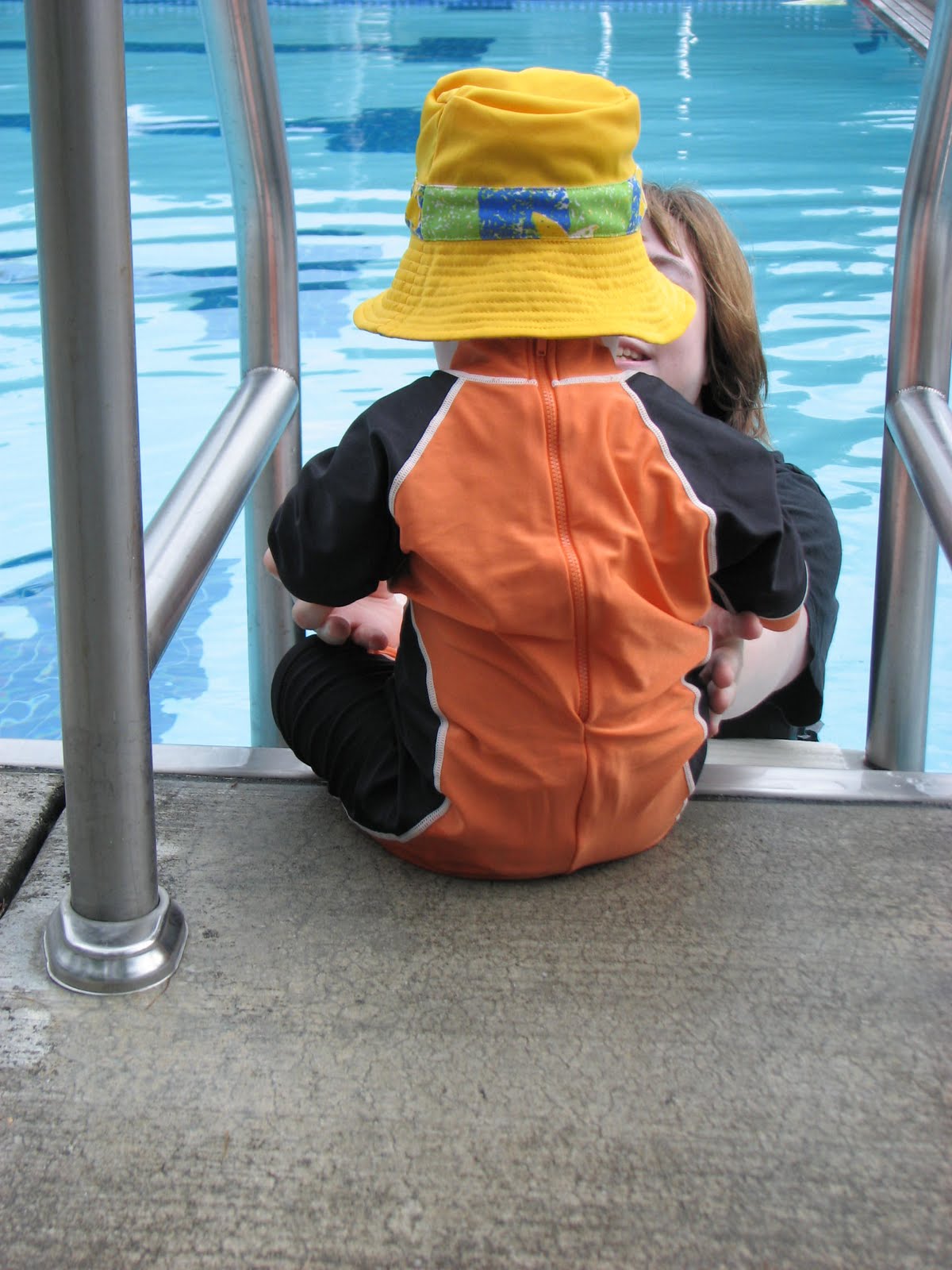
Recently, I was reading about birth and I came across an article that disturbed me. (I will not mention the article or the author of this article because I feel that midwives are already maligned too much and I do not want to impugn all the good she writes and does for women and their births because of one part of one article.) I'm not as "birthy" (yet!) as some of the other amazing women I know, but I do love a good birth story. I whole heartedly believe in a woman's right to choose her birth and that women in our current birth culture are not given all of the information they actually need to choose the best birth possible for themselves and their babies. Women also often don't have enough access to birth settings that are best for them because of insurance concerns. However, in this article, the author was talking about the long term effects of birth and mentioned a conversation she had with another midwife in which the midwife pointed to women playing in a swimming pool with their babies and stated that she could determine the kind of birth (natural, cesarean, or medicated) each baby had by the connection (or lack there of) the mother/baby had in the pool. That moment cut me to the quick because I am a mother of a baby born through cesarean and it hurt me deeply that there was an assumption that because of the way my baby was birthed, we somehow could never grow as deeply connected as mother and child as a mother who had successfully had a natural birth and that difference would somehow be obvious even to the most casual (but interested) observer.
As important as birth is (and it is very, very important) to the health and well-being (physically and mentally) of both the baby and the mother, it is still only one part of the relationship between mother and child. When a c-section happens it is still a birth; when a medicated birth is chosen, that is still a birth. Both are just as much new beginnings for mother and babies as much as natural births are and each new beginning holds just as much promise as the next one for the people who are involved in it. Bonding after a cesarean or a medicated birth is not impossible and lack of initial bonding (should that occur), is not as insurmountable as the author seemed to suggest in that vignette. In fact, what brings many women into birth activism and attached parenting practices are their difficult birthing experiences and from those sad beginnings spring strong women who work tirelessly to connect to their children in new ways and to make birth safer for the women who become mothers after them.
Our children may only be physically, literally born once, but they are spiritually born many, many times as they grow and change. We, as their mothers, also have the chance to birth ourselves into new kinds of mothers and women. Every day, we are offered the chance to make a new start and, personally, I avail myself of those opportunities as often as I can. When we focus too single-mindedly on the importance of physical birth and any regrets we have about our past decisions, we risk missing the rebirth we have available to us every day. I know that my son and I are not the same people who met on the day of his birth after an unplanned c-section. We have grown beyond the mother and son that were birthed that day. The love we share and the relationship we have worked to build has helped us evolve into something better. I love him more every day. If we were swimming in that pool, I don't think anyone could ever see us as anything other than what we are, a completely bonded, loving mother and child in spite of our less than perfect birth experience.
Thanks again for reading,
Shawna

Tuesday, July 26, 2011
Traumatic Birth - Call For Submissions From Solace For Mothers
I found Solace For Mothers only a few months ago. Having had a traumatic birth, I couldn't believe it had been almost four years before I found this amazing resource.
Solace is a place for mothers to discuss their traumatic birth, and everything that comes with it in a safe environment. For most women that have been through a traumatic birth, it is hard to talk about what happened for fear you will be told that you are making things up, or that you should just be happy your baby is healthy. So instead, you keep it all in, and each day it eats at you a little bit more.
The trauma from birth can have more effects than just the physical. There are emotional and psychological effects that are longer lasting than the physical and get pushed under the rug because they aren't on the surface for people to see. My grandma once told me that she still has some issues from the birth of her fourth baby, and that was over 45 years ago.
The support from this community is invaluable, and speaking in a safe place can help you feel even a little bit in control.
Solace For Mothers is looking for mothers willing to share their stories to be published in book form. One of the hardest parts about birth trauma is that most feel alone and don't think anyone else has ever been through this. This book can be one of the ways to help women feel like others understand how they feel.
If you have been through a traumatic birth, please consider submitting your story. The format for the story, and the phone number to talk to a counselor if you are having trouble writing your story, can be found HERE.
The awareness for traumatic birth needs to be raised, women need to realize they aren't alone. If your story can help that, truly consider submitting.

Solace is a place for mothers to discuss their traumatic birth, and everything that comes with it in a safe environment. For most women that have been through a traumatic birth, it is hard to talk about what happened for fear you will be told that you are making things up, or that you should just be happy your baby is healthy. So instead, you keep it all in, and each day it eats at you a little bit more.
The trauma from birth can have more effects than just the physical. There are emotional and psychological effects that are longer lasting than the physical and get pushed under the rug because they aren't on the surface for people to see. My grandma once told me that she still has some issues from the birth of her fourth baby, and that was over 45 years ago.
The support from this community is invaluable, and speaking in a safe place can help you feel even a little bit in control.
Solace For Mothers is looking for mothers willing to share their stories to be published in book form. One of the hardest parts about birth trauma is that most feel alone and don't think anyone else has ever been through this. This book can be one of the ways to help women feel like others understand how they feel.
If you have been through a traumatic birth, please consider submitting your story. The format for the story, and the phone number to talk to a counselor if you are having trouble writing your story, can be found HERE.
The awareness for traumatic birth needs to be raised, women need to realize they aren't alone. If your story can help that, truly consider submitting.

Wednesday, April 27, 2011
Five Things that Shocked Me about Cesarean Recovery
I've said before that my cesarean was not a planned one, so to say that I had no idea of what I was getting myself into is an understatement. My learning curve after having my son was steep. Here are some of the "surprises" I encountered in both my son and my recovery that I had never read about prior to and that I don't see mentioned very often anywhere.

1. Unexpected Digestive Issues
It seems very clear to me that my son was fated to have digestive issues. He had really bad reflux until he was about six months old. He has struggled a very underdeveloped digestive system (although it has improved greatly over the past few months) and has a very acute dairy allergy. These natural digestive issues were further complicated by his cesarean birth. One of the first issues he encountered was excessive gas and spitting up developing within hours of his birth. The nurse assigned to us the first day assured me that babies born through c-section often have gas and spitting up issues the first day because when the baby is born through c-section, they are often frightened by the sudden action of the doctor pulling them out. This causes them to cry and to swallow large amounts of amniotic fluid as they are being pulled out. (Conversely, babies born vaginally often do not because of the pressure exerted when they are pushed out.) I don't know if this is true from any other sources, but as the nurse was a twenty year nursing veteran, I had no reason to doubt her expertise. I can attest, the my son was a burping/clear fluids puking machine his first twelve hours or so.
Babies born through cesareans also lack exposure to the helpful bacteria of their mother's birth canal. This bacteria is the same bacteria that should be found in any healthy digestive system, but are missing from most cesarean birthed babies. (Cesarean birthed babies have, instead, been found to have bacteria found on the skin in their digestive systems.) This lack of helpful bacteria can make foods (even breastmilk) harder for those babies to digest.
2. Extreme Cluster Feeding
It is my understanding that most babies clusterfeed to some extent especially during growth spurts or during times when there are supply issues. Cesarean birthed babies take this to the extreme with clusterfeeding sessions lasting hours on end. This happens most often on the third through fifth day after birth. I've read that this may be the babies' reaction to a slowness in the mother's milk coming in (another common side effect of a c-section is that the milk is often delayed in coming in). In my case, my milk came in only two days after my son's birth, but my son still extreme cluster fed on both the third and the fourth day after birth. The third day (the day we came home from the hospital), he fed for almost eleven hours straight from 4 in the afternoon to 3 in the morning. He slept only in four ten minute stretches that entire time. Panicked, we trolled in internet and found descriptions of this behavior and even called the hospital ward we had just left. We were assured by both sources that this is not uncommon for cesarean birthed babies. (The following night, he cluster fed for 9 hours straight; the night after that, he fed for five hours . . .after that, he stuck to two hours or less.)
3. Physical Recovery takes a lot longer than Six Weeks
Before I had my c-section, I thought that when books said there was a six week recovery time that at the end of the six weeks you would be fully recovered from your surgery. I was so wrong. Six weeks is the MINIMUM recovery time. It is basically the time your body needs to recover enough so that the incision site will not likely reopen. It takes months for your body to fully recover (at least nine months for the muscles alone to heal). It is not uncommon for the incision site to remain tender and for the muscles to ache long after those six weeks are up. Some parts of it never heal. (I have permanent numb spots along my incision site.) Most resources I have read say that to insure your body is completely healed from your surgery and give you your best chance at a VBAC, you need to wait at least TWO YEARS before conceiving another baby. Even if you do wait that long your muscles and the skin of your incision site is forever altered and my not be as elastic or as comfortable as it was during your pre-cesarean birth pregnancy. (Kayce has been very candid about some of the experiences she has had in her post cesarean pregnancies.)
4. Mental Recovery Can Take Even Longer
Some women have cesareans (expected or unexpected) and feel perfectly content with both the procedure and its aftermath. Some women are devastated by it and even suffer PTSD. Others are somewhere in between. It's impossible to know where on the spectrum you might land. Prior to going into labor, I would have told you that although I was planning a natural birth, I would be fine with a necessary cesarean. However, after my labor, I learned that wasn't true. Even though I really do think that my cesarean was necessary, it has been a huge emotional hurdle for me to recover from.
In the beginning, it was really hard to struggle with my emotions because it didn't seem like anyone around me really understood why I was struggling. I think all new mothers struggle with a version of this. Taking care of a newborn is mentally and physically exhausting and sleep deprivation is far crueler than most of us realize until we experience it firsthand. Meanwhile, it seems that everyone around you keeps cajoling you to "cherish every minute." You can start to feel you are a terrible mother just because you are crying because your breasts ache and you haven't had a two hour stretch of sleep in three weeks. For mothers who have just had cesarean surgery, you are dealing with post-partum emotions, physical demands and recovery from your labor, and intense physical recovery from a surgery. Unlike most other emergency surgeries which would result in other people tenderly attempting to take care of you, a c-section is treated almost as if it didn't happen by a lot of people because the focus is on the healthiness of the baby not the mother. Of course, every mother is delighted that her baby is healthy, but it is also perfectly normal (even healthy) for her to be aware of her own discomfort and recovery. It's also natural to go through highs and lows in your emotional recovery.
My own emotional recovery has also been impeded by what I refer to as "The Mt. Everest Syndrome." Prior to my labor, when I heard about people who made it almost to the top of Mt. Everest, but had to turn around for technical, weather, or health reasons, I never really understood why they became obsessed with trying it again. Wasn't it enough that they almost made it to the top? They made it further than most of us ever will. Why do they need to risk it again? Now, I understand perfectly well where their obsession comes from. I labored for 26 hours without pain killers. I have learned that I am a woman warrior and that I have the mental and spiritual strength to birth a child. I know what I am capable of. However, because my son got stuck, I have yet to be able to show the rest of the world what I now know about myself and that drives me mad. I have often described my c-section as "defeat snatched from the jaws of victory." I feel like an Olympic athlete whose shoelace broke causing me to trip inches from the finish line. I long to roar my child into being and to claim that victory as my own. I want to be one of those women who say with pride "I birthed my baby and now I can do anything."
5. C-Sections Introduce Troubling Doubt
The most nefarious, by far, of all the surprises I have encountered during my cesarean recovery is the introduction of doubt into all thoughts of future births. Many women who have experienced cesareans (maybe especially the women who experienced necessary ones) feel self-doubt as to whether or not their bodies will be reliable in future labors. Having been failed by your body once, it's hard to have complete faith that your body will not fail you again.
Complicating this self-doubt further is the doubt of everyone around you. A woman who is planning her first birth is told "when you go into labor" and "when you birth your child." A woman planning a VBAC is told she will have a "trial of labor" and "if you birth your child." Even those who believed in her the most during her first labor or in her labors prior to her cesarean now have cause to doubt her and her ability to birth. That can make future labor feel like an uphill battle already. In an attempt to realistically acknowledge what has been proven to be a birth possibility, support team members often feel they need to develop the repeat cesarean birthing plan alongside the VBAC trial plan. It's a little like training to run a marathon while your cheering section is gassing up the car to pick you up when you collapse. (A necessary evil, but still a gut checking one!) During my first labor, when I hit a wall during transition and said aloud that I couldn't go on, that I didn't have the strength, I was immediately assured by those around me that I could go on and that I did have strength. Now, I live in fear that if I am not in the right environment for birth, I will be believed if I utter those words again and will end up with another c-section which is something that I most assuredly do NOT want for myself or my child unless it is necessary.

Tuesday, April 19, 2011
My Cesarean Story
This is the story of my daughter's birth. The easy pregnancy turned rough, an unnecessary procedure turned emergency cesarean. I decided to rewrite it for Cesarean Awareness month and give it a fresh perspective, with all the emotions rather than the edited down version I normally write.
--------------------------
My pregnancy with my daughter was easy. We tried to get pregnant for three months before we got our positive, but it never felt like a long time. From the first instant, I never had a thought that anything could go wrong or that we would lose her. It just felt right to be pregnant.
I called the OB that my mom had when she had me, and ended up being transfered to the CNM at the hospital. He had retired a few weeks before I got pregnant (which I am now incredibly thankful for as his name around here was "the butcher". He had an almost 70% cesarean rate) and the CNM had taken all of his clients and was getting calls that used to go to his office.
I never thought of having a midwife. I knew that I wanted a natural birth, not because of anything I read, but because my mom labored naturally with me until she was taken for a cesarean. I never thought that pain medication was necessary because my mom never had any. I set up the appointment, and it was smooth sailing from there.
My family was a bit weird about my having a midwife, but when they learned I was still having the baby in the hospital, they could have cared less.
My pregnancy progressed really well. I never gained much weight, I had hyperemesis gravidarum (severe "morning" sickness) throughout my pregnancy, but it was never bad enough to be hospitalized, and my plan was to labor without medication and for me to specifically ask for meds and my midwife to approve before I got any. It seemed perfect.
At 35 weeks, we found out our daughter was breech. My midwife sent me for an ultrasound to check what position she was in, how much she weighed, and how much fluid there was. We came back from the ultrasound completely shell-shocked. My fluid was at an 8 (10 is the lowest they want), she was said to weigh 4 lbs 3 ounces, and was Frank Breech (feet up by her head, butt in my pelvis). I was put on instant bedrest (which I never followed) and had to have 3 ultrasounds a week followed by a non-stress test to see how she was doing. It all seemed so unreal.
My care was transferred to an OB without my consent. They set up a consultation with him to do an external cephalic version (where they manually turn the baby from breech to head down). I wasn't given a choice.
They told me that we would do the version at 37 weeks 1 day. If she turned and I didn't go into labor, they would send me home. If she didn't turn and I didn't go into labor we would try again at 39 weeks or schedule a cesarean. And if I went into labor regardless, I would be either able to have a vaginal birth, or would be whisked for a cesarean.
The days before the version, I was secretly excited. My mom had two cesarean sections and she was fine. My brother and I turned out fine. I almost hoped that I would have one so I could meet our baby and take her home. Sometimes I think that those thoughts are what lead to my cesarean.
The day of the version came. I had an epidural placed, an IV put in with fluid and meds to calm my uterus (I had been having braxton hicks contractions since 17 weeks), and had an ultrasound done to make sure she hadn't flipped already, though they did the ultrasound AFTER I had everything already placed.
It took them two tries to turn her. It was more pressure than the cesarean was. They had to lift her out of my pelvis, and the OB pushed her head while the CNM pushed her butt. The second time she spun around beautifully, but I could barely breathe because of how hard they pushed on me. I didn't notice that they were both sweating from pushing so hard. They did another ultrasound to make sure she had turned, told me they were going to monitor me for a few hours to make sure she was okay, and they would check me later.
The epidural and medication made my legs spasm and I started having anxiety attacks. I couldn't breathe and I felt like my chest was caving in on me. I started throwing up. About this time they noticed that I was having regular contractions and her heart would slow down during and after each one. With some her heart beat was completely vanished. I was given an oxygen mask, pushed onto my left side and left alone with just my husband.
The version was done at 7 am that morning, and by noon, they were getting worried about her heart rate. I was only one centimeter dilated. I was told they were giving me a cesarean and I didn't have to consent because before a version, you sign papers saying that you agree to a cesarean section should it become necessary. I had to have a second dose of epidural medication, and they had to give me three times the dose because it wasn't working.
My daughter was born at 1:41pm. It turns out that when they did the version, they pulled part of her placenta off. I remember a lot of tugging, throwing up because of the pulling and pressure, and then just silence.
My daughter didn't cry. A few minutes later I heard a tiny cry, and she was instantly whisked away to the level 2 NICU, and my husband with her. Then, darkness.
I woke up in Recovery, not knowing what had happened. I didn't believe I had a child. I tried to ask if she was okay, but then darkness again.
My husband called everyone to tell them about our daughter. He got to hold her and be with her. I was alone for almost 4 hours after her birth. One nurse brought me a really crappy Polaroid picture of her, but it was blurry and I couldn't believe it was my baby strapped to that many wires.

When she was seven or eight hours old, one of my postpartum nurses came in to see how I was and asked if I had seen my daughter yet. I told her no and she was furious. She told me every mother should see her child no matter the situation. She got me into a wheelchair with my IV pole and my catheter and took me to her.
 She had hair all over her body. She was so tiny at 5 lbs 13 oz. They told me that she looked much earlier than a 37 weeker. She had tubes of oxygen in her nose, an IV of sugar water to keep her nourished, a pulse oximeter to see how her oxygen levels were, and a monitor for her heart and lungs. She had already had an X-Ray to see if she had pneumonia. She was bruised on the entire right hand side of her body. She had two vaccuum spots because they couldn't get her out of the tiny cesarean incision they had made with just their hands.
She didn't feel like my baby.
I was only allowed to stay with her for an hour, and had to leave her alone in the NICU.
 The next day, my parents and my husband's brother, his wife, and his grandparents all came. I got to hold her for the first time. She didn't even make a noise. I was told she had had another X-Ray and her oxygen levels had almost reached the maximum they were allowed to give at a Level 2 NICU. She was so red because she was trying so hard to breathe. The nurse only let me hold her for thirty minutes and said that I had to put her down before I hurt her more than I already had.
The next afternoon my daughter was life-flighted to a Level 3 NICU an hour away. We followed close behind with my husband's parents. My parents showed up at the hospital a little bit after we got there.
Instantly she looked better. She was almost 3000 feet lower than at the old hospital, and just the shift in altitude helped her breathing. She was still at a very high level, but things looked a lot better.
I pumped every three hours and the next morning, my milk came in with a vengeance. In the three days I pumped at the NICU, I was able to store almost 150 ounces of milk. The day my milk came in, she was finally able to take a little bit of it through a tube. They slowly increased her stomach size for three days until her stomach could hold about 50ml. When she was 6 days old and finally off the oxygen, we finally figured out nursing (after she pulled out her tube in a fit).

When she was a week old, we went home with six oxygen tanks, an oximeter, and an appointment to meet with her pediatrician to decide if she was okay to come off the oxygen since we were 3000 feet higher than the NICU.
It took me a long time to feel like I was her mother. It took me a long time to truly love her. I didn't bond with her at all, and she just felt like some baby I was nursing.
I hated how I felt. We tried to keep her in her crib, but I couldn't stand it and finally brought her into our bed. I had her away from me enough in the NICU, I wanted to make sure she knew she was cared for at home.

It took me almost 18 months to write her story the first time. Since, it has gone under many revisions, and has helped shed a lot of tears. To this day, almost 4 years later, I regret to my very core hoping, even a little bit, that she would be born the day of the version. I regret not researching for myself the benefits and risks of the procedure. I regret how she was the one that was made to suffer because I didn't know that I needed to advocate for myself and not just blindly trust someone I was paying.
I still have trouble thinking about her birth. I celebrate that she is beautiful and healthy and happy, but inside, part of me is still so angry and so depressed about what happened.
Most of me is so glad it happened, though. If I had had a natural birth, I doubt I would have found my calling as a midwifery apprentice. I doubt I would care as much as I do about women, pregnancy, birth and breastfeeding. I am so happy that it happened if only so that I finally found a "job" that I am happy doing.
Since her birth, I have come to realize that I can love her with everything I have, but still hate and mourn the day she was born. I have come to realize that it isn't about having a healthy baby, it is about having a healthy and happy mother and baby.
My cesarean was so hard in so many ways, and I am still dealing with the scars left behind. I don't think I will ever just get over most of them.
You can be happy your child is alive and healthy and still mourn. You can love your child and hate they day they were born. It isn't black and white.
A healthy baby isn't all that matters.
A healthy mom, inside and out, matters just as much.

My beautiful daughter, who made me the person I am today
Wednesday, April 13, 2011
Unexpected Cesarean
 I need to preface this story by admitting something. I never, ever thought a cesarean would ever happen to me. I'll admit that I even felt a little smug when I sometimes heard of other people planning natural births and then ended up having c-sections. I thought to myself, they must not have known how to fight for their bodies or they must not have known that they could have had a natural labor if they just tried x-y-z. I knew there were rare occurrences in which women needed c-sections and I knew those women had no choice (and I understood why c-sections had been invented to save those women and their children), but I didn't think that would be me! Well, I'm here to say that I thoroughly researched natural childbirth, thought I had taken just about every precaution . . . and I still ended up with a c-section! Here's my story:
We had no inkling that we were going to have our baby the least bit early. In fact, all along, I had almost planned on having the baby at 40 or 41 weeks. My mother had always had beautiful, swift, natural childbirths at 41 weeks, so I expected the same. It never even occurred to me that I would have a birth with any interventions. I had intentionally decided to use the practice that had the lowest rate of any interventions and to give birth at the hospital with one of the lowest intervention/c-section rates in the country.
So, when I stood up in that crowded movie theater on the night of July 25, 2009 and took a step down the stairs and felt my water break at 10:15 pm at barely 38 weeks, I was shocked beyond belief! We called the practitioner on call (a doctor that weekend; the practice has doctors and midwives working together) and told her what happened. She suggested we call again when the contractions had started and were five minutes apart lasting at least a minute each for about an hour. We then went home to check over our bags and to try to get as much rest as possible.
What followed was the longest day of my life. It began well enough. We were put in the room with the nicest birthing tub and visions of waterbirth danced in my head as we settled in. (All the rooms in this hospital birth center were equipped with tubs, squat bars, birthing stools, birthing balls, etc. but this was, by far, the nicest of the tubs.) I knew from all of my labor books and my hypnobirthing class that my labor might slow a little as I got used to the new surroundings and, it did, but after some walking and bouncing on the ball, it picked back up.
As far as the contractions themselves went, I actually found that I could focus myself inward and make myself relax with each one pretty well. (Because I remained so calm throughout, I actually ended up having my nurse say that she had to check out hypnobirthing if it could help her be in labor like me.) Unfortunately, hour after hour passed with contraction after contraction, but no real progress was made as far as dilation and although the contractions became longer, they were not intensifying the way I expected and wanted them to. Still, I remained active and used probably every single laboring position I’d ever heard of in attempt to intensify my labor naturally. Seriously, every single one! Looking back, those first twelve hours or so were my favorite of the whole labor. My husband and I were a team with him writing down my contraction time and talking to me as I used my imagery to relax and work through each contraction one at a time. At about 10:30 am , the nurse asked if I wanted to order some food, so I ordered some fruit and a bagel, but I wasn’t even able to finish that. I wasn’t hungry for food. I wanted my baby instead.
At 12:30 pm , my doctor checked my dilation for the first time and discovered I was only at 3.5 cm. She also discovered that because it had been so long since my water had broken that a “pocket” had formed. With my permission, she broke the pocket and asked if she could re-assess in three hours, but shared her concern that if the labor had not progressed by then, she would like to introduce a very low level of pitocin because it had been so long since my water had initially broke. I was pretty heartbroken about the idea of not having a pristine completely "natural" birth and maybe not being able to have a water birth. (I was also a little scared about how much more painful the pit might make things and how stressful it would be on the baby.) I actually got so worried about it that my labor stalled for about a half an hour with the contractions getting further apart rather than closer. I took that time to lay down and rest for the first time since 4:30 that morning. But, after a quick cat nap, I soon redoubled my active efforts. I was convinced that my body would take over and would birth my baby, it just needed some time. I took a shower and tried nipple stimulation. I squatted and walked miles around my room. But when she checked in at 3:30 pm , I had not dilated any further. After discussing it further with my doctor, she promised to use the lowest levels of pitocin possible and to turn it off in time for me to push my baby in the water. (She shared that the hospital strongly encouraged the doctors to try to have women give birth within 12 hours of their water breaking . . . a milestone that we had already exceeded by five hours, but as far as her practice went, she would like to see us have the baby within 24-36 hours.) Not really knowing why the hospital and the doctor thought there should be a time limit on my delivery because my water broke, I felt really confused and scared that my body seemed to be so disappointing in its delivery preparation. However, we didn't know what else to do, so, we consented. (I'm still not sure if this was the right or the wrong thing to do.)
To my surprise, I found I could focus just as much as I could before and found that while the pit made my contractions more rhythmic, they did not make them more painful. Pain medication didn't even enter my mind because I was so focused on taking each contraction one at a time and with each one I’d promise myself that whatever happened in the future, I would get through this contraction this time.
When the doctor checked again, she saw that I was still at 8 cm and the swelling of both the baby's head and my cervix had increased. She held my hand as I cried and agreed that a c-section was probably my best option. It helped to talk to my doctor. She tried to make me feel better by saying that if it were at all humanly possible, I would have had my baby naturally. She also pointed out that 100 years ago, a woman like me would have likely labored for days and if I had been successful in having my son, it was unlikely that both of us would have been okay, but she promised that 45 minutes from that moment, we would both be alive, well, and together. She told me not to feel I was a failure and, whenever the time came when I wanted to try again, she knew I could be successful with a VBAC. She also told me that she suspected that the baby might have tucked his head the wrong way and was now stuck. (It turned out that she was right about that. That's why he hadn't descended properly and why I didn't finish dilating as I thought I would.) Her words were kind, but I found them hard to believe for a long time. She did offer me more time to see if maybe I just needed to relax more, but I did not want my baby exposed to any more epidural than he had already been exposed to, so I told her just to do the c-section. (Moments later, his vital signs started dropping, so I was glad that the room was already being prepped.)
The anesthesiologist was paged once more to get me ready for the surgery. I apologized to him for my rudeness earlier and he shrugged and said he’d seen worse. (I’m pretty sure that this “worse” wasn’t directed toward him, though.) As we rolled toward the operating room, I warned him that I would soon be throwing up. He asked if I was nauseous or if I’d eaten recently and I told him the answer was “no” to both of those questions, but using the epidural for the surgery would result in me throwing up. He smiled and said that probably wouldn’t happen. Just in case, though, he gave me an antacid. It tasted like liquid cheap cherry tums. “This will taste pretty gross coming back up.” I told him. He just laughed. “It won’t be coming back up,” he said. He was wrong.
Laying on the operating table, waiting for my baby to be born, I felt like a strange parody of what I had hoped my birth would be. My upper body could not stop twitching and although the medications kept me from feeling the pain of what was going on, I could feel pressure throughout my lower abdomen. Then I felt her pushing on my stomach and before I knew it I was retching all over myself and I didn’t stop at once or even twice. All I know is that I was mid-retch when I heard a baby crying and I had to remind myself that it was mine. It was 3:25 am on Monday morning. My baby was finally here. I still hadn’t seen him and it seemed like an eternity before they brought him for us to see. (They were waiting for the cord to stop pulsing which is what I had requested them to do.) Finally, they brought him around rear end first so we could see his sex. “It’s a boy.” my husband said with wonder and tears in his voice. Then they took the baby over to a corner of the room to get him weighed and my husband followed him. As the anesthesiologist administered an anti-nausea medication and worked frantically with one of the nurses to help clean all the puke out of my hair and change the hospital gown that was draped across the top quarter of my body, I heard my husband exclaiming all the features he recognized. “He has my monkey toes! He just grabbed my finger with them! And “He has blue eyes and they are amazing!” Meanwhile, I was struggling to keep my eyes open. The anti-nausea medication contained a mild sedative that ordinarily would have just made me slightly calm, but, after 27 hours of labor, was making it a real struggle to keep my eyes open despite the brightness of the room and the knowledge that my baby was there. I had anticipated a lot of emotions when I had my baby, but apathy was not one of them. I was ashamed of myself and my struggle to stay awake and engaged.
However, there was one moment in the OR that I will treasure forever. When my husband was first handed our son to bond skin to skin with him, I heard my baby scared and crying. Instinctively, I started singing him the special song I had sung to him every day with his name in it and he instantly quieted and calmed. Suddenly, everything was okay because he knew that I was near. “He KNOWS you and he KNOWS that song!” The anesthesiologist cried. “Of course he does,” I said tiredly, “I’m his mama and we’ve spent nine months together.” That was our only connecting moment that first hour or so. I tried to reach out and touch him as he snuggled skin to skin in a chair behind me, but my hand was so cold that he pulled away from it to burrow into his much warmer father. Mother/son bonding would have to wait until we got out of the operating room.
I share this as my contribution to ICAN's Cesearean Awareness month. Next week, I will talk about the surprising things I learned about c-sections while recovering from mine.

Subscribe to:
Posts (Atom)
