We planned on homeschooling. As things progressed, unschooling became more our style. Our daughter was able to learn what she wanted when she wanted, we were both infinitely happier, and she was learning.
Fast forward to her sixth birthday, less than a month before the school year. We were on a walk, and as we passed the local elementary school, she turned to me and said she wanted to go to school. This has happened before and normally she forgot by morning so I nodded and said we would talk about it tomorrow.
She woke up the next day, a Friday, announced she really wanted to go to school and asked when it started. So, I called the Montessori Charter school to get a private tour. Strangely, people where I live don't like how this elementary school doesn't test as well so they are barely half full. And for a Montessori school that's huge! It's free, it follows a Montessori philosophy, and there are so many openings.
That afternoon we had our tour.
I have never seen her so happy.
The Assistant Director gave us our tour, answered all our questions, and it felt right.
Less than a month later, she was starting first grade in a public charter after we originally wanted to unschool.
To many, this is a little out there. Unschooling isn't the most popular view to begin with, but then it seemed like we gave that up for the exact opposite when she started public school.
To me, we were following her wishes. I've never been a parent that pushes their own ideals and wishes on their child, to the amusement of many, and we let her choose this too. Why should I force a decision I wanted on my child when she clearly wanted something different?
Now, I will admit, a public Montessori Charter isn't the same as public school. There are no desks, most learning is very hands on, there are no group lectures, no forced learning. She is allowed to learn what she wants when she wants, the Montessori way.
At first I felt like a homeschooling failure. How could I want to do something so much, and then love it more when she is at school? How could we both love this new system more than the freedom of the old?
It took a long time for me to understand that our lives are not a fantastical whim. Rarely, if ever, do things go exactly how you planned.
For me and my daughter, this is the best thing we could have done. Both of us are happier. She has such a hard time when school is out! She loves the new environment, loves her friends, loves that she has control over her learning. I love that she is so happy.
In the end, I trusted her. I was nervous and worried, but she is thriving.
Some children would not thrive in a public schooling atmosphere. Others would not thrive in an unschooling atmosphere. Trusting them to help make that decision is so important. Yes, I understand that not everyone has the resources to make these choices, and it can be so hard to decide when your choices are much more limited, but you can still trust your children.
Talk to them. Find out how they learn. Find out what they want to do.
They might surprise you with how much they truly know and understand about what they want.
Showing posts with label homeschooling. Show all posts
Tuesday, January 28, 2014
Thursday, July 26, 2012
Some Thoughts on Homeschooling
Disclaimer: I am a complete novice at this home education thing; we are just now beginning our second year. Yet, I'm already hearing a lot of chatter, so today I'm sharing a few tidbits I have found to be common misconceptions.
But compulsory education works. I guess that depends on your goal. This article from Seth Godin (yes; that Squidoo guy) is one of my favorites on the subject.
You have no credentials! First I must say I greatly respect and admire teachers of all grade levels. Really. I'm not saying that because that's what homeschoolers are supposed to say so they don't sound snotty. I mean it. However, a teaching degree does not come with magical powers. I am qualified to teach my own child.
But what are you teaching her? E has significant input into what she studies (and when . . . and how); our "curriculum" is a joint effort. About month ago we brainstormed a few things she liked most about "school with Mommy" and made a short list: math, writing, and getting new books from the library. I helped her narrow down a few subjects to focus on, and she chose the 50 states, weather, and Spanish. So that's what we're doing. In a few months, we'll re-evaluate and continue or move on. It's really that simple.
How do you know she is learning? You mean without standardized tests and grades? Hmm . . . how do you know you are learning?
Oh, you're one of those Jesus-y people. Sadly, a lot of folks assume if you are a Christian and homeschool it's only because you must not want your children ________ [fill in the blank: exposed to other religions, learning about evolution, taking sex ed, studying history that's not biblical]. While that may be the case for some, we are just Christians who happen to homeschool. Or homeschoolers who happen to be Christians.
Why not just move to a better school district or try private school? I don't have an issue with any particular school, we live in what would be considered a "good" school district (whatever that means), and I have considered private school as an option. For me it's not about finding the right school; it's taking issue with the whole concept of schooling in its current state.
What about socialization? I cannot even bring myself to answer this one. However, if you enjoy a little snark as much as I do, you will love this post from Weird Unsocialized Homeschoolers.
Thanks for reading and have a blessed day.
Labels:
homeschooling,
Valerie
Tuesday, April 3, 2012
A "Field" Trip
I won't lie, field trips are one thing I worried about when we decided to homeschool. I loved the field trips we were able to go on when I was in school, and I wanted my daughter to have that too.
This weekend we went with my family to the Fremont Indian Museum and Cove Fort. We've gone places with them before, but not when our daughter was old enough to understand what was going on.
At the Museum, my daughter was enthralled with the video they played before we walked through the museum and walked the grounds to see the rock drawings. She kept looking at my dad and talking about the Indians during the movie, and was so excited to be learning.
We walked through the museum and she crushed corn the way the Fremont Indians did, she climbed in and out of the houses they lived in, looked at everything and was so excited.
When we went on the hike around the Visitor's Center, she would point out the rock paintings to us and would lead everyone in a discussion of what we thought they were drawing.
Outside the center, they have a Granary and a house set up, which you can climb into. We climbed down, talked about how they lived, if we could do it, and where the Fremont Indians might have gone.
After, she bought some rock candy and since it was Easter, you could pick an Easter Egg and keep what was inside. Inside she got a rock in the shape of a rabbit, and every time she sees it, she talks about the Indians and everything she learned.
Cove Fort she was much less interested, but they had places to run around so she really wanted to enjoy the sun before we had to drive the two hours home.
Going there and watching her learn made me realize that she won't need formal field trips to go places and learn new things. Because we will be homeschooling, we can do this whenever we want! Utah is full of history, and Southern Utah is close to a lot of it so we don't have to travel very far to see amazing things.
I can't wait until we go on our next "field" trip.
This weekend we went with my family to the Fremont Indian Museum and Cove Fort. We've gone places with them before, but not when our daughter was old enough to understand what was going on.
At the Museum, my daughter was enthralled with the video they played before we walked through the museum and walked the grounds to see the rock drawings. She kept looking at my dad and talking about the Indians during the movie, and was so excited to be learning.
We walked through the museum and she crushed corn the way the Fremont Indians did, she climbed in and out of the houses they lived in, looked at everything and was so excited.
When we went on the hike around the Visitor's Center, she would point out the rock paintings to us and would lead everyone in a discussion of what we thought they were drawing.
Outside the center, they have a Granary and a house set up, which you can climb into. We climbed down, talked about how they lived, if we could do it, and where the Fremont Indians might have gone.
After, she bought some rock candy and since it was Easter, you could pick an Easter Egg and keep what was inside. Inside she got a rock in the shape of a rabbit, and every time she sees it, she talks about the Indians and everything she learned.
Cove Fort she was much less interested, but they had places to run around so she really wanted to enjoy the sun before we had to drive the two hours home.
Going there and watching her learn made me realize that she won't need formal field trips to go places and learn new things. Because we will be homeschooling, we can do this whenever we want! Utah is full of history, and Southern Utah is close to a lot of it so we don't have to travel very far to see amazing things.
I can't wait until we go on our next "field" trip.
Labels:
field trips,
homeschooling,
Kayce,
nature,
unschooling
Sunday, April 1, 2012
Sunday School: Pure Play
Welcome to the Connected Mom Sunday School. No matter what the course of your child's education, be it unschooling, homeschooling, or conventional schooling, The Connected Mom Sunday School aims to provide you with fun and easy activities for children of all ages and stages. Have an idea for a Connected Mom Sunday School activity or theme? Either comment below or send your idea to connectedmom (dot) julian (at) gmail (dot) com.)A few weekends ago at a homeschool conference, I was privileged to hear a talk by Peter Gray, research professor of psychology at Boston College--and the author of one of my favorite education blogs. I had to duck out early due to a family concern, but not before I learned about a troubling trend: research has shown a steady increase in childhood anxiety and depression as opportunities for free play and expression have declined. Historically, kids have learned through self-directed interactions with their world. Is it possible that keeping them constantly busy with adult-directed activities contradicts their nature? Could we be unintentionally harming our children's emotional wellbeing?
With this fresh in my mind, I cannot bring myself to highlight structured activities. This week, I will not describe any specific project. Instead, here are some suggestions for facilitating child-directed play. Set up the opportunity, then sit back and marvel at where your child's imagination will go.
Toddler
If you haven't checked out Play at Home Mom, I highly recommend it. These moms share all sorts of fun activities to expose your kids to new sensory experiences. One tool they often use is a light box or light panel. The simplest DIY version simply consists of a string of white Christmas lights inside a clear storage bin. You can see that light box, along instructions for a more complex version, at their website. Kids can use a light box with all sorts of small items; transparent or translucent items work really well. You might set out transparent building blocks, colored films, or jars of colored water. Now, you might ask "Isn't this activity parent-directed?" Not really. The moms lay out the activities in a way that attracts the childrens' attention--they call it an "invitation"--then they allow the kids room to experiment.
Preschooler
Busy Bags
Busy bags contain small, self-contained activities to occupy toddlers. Some activities may be more structured, such as tracing letters or matching colors. There's nothing wrong with that, but since this post focuses on child-directed play, I'll share a few of the more open-ended ideas:
- About 20 twist ties in a small bottle: Kids can twist them, straighten them, build sculptures, or drop them one-by-one into the bottle.
- Face feature magnets: Clip pictures of various facial expressions from magazines or from the Internet, stick them to magnetic sheets, and cut out. Store them in a small tin. Kids canuse them to make all sorts of silly faces.
- Velcro shape sticks: Attach small pieces of velcro to the ends of several craft (popsicle) sticks. The original idea has you color code the sticks to form specific shapes. For a more freeform version, Iwould skip that part and let kids build whatever they can imagine.
- Play dough and small cookie cutters.
- Colored pasta or beads and string or pipe cleaners to string it on.
These are nice because you can throw them into your purse or diaper bag and pull them out at times when your toddler must sit and wait (at a restaurant, for example). The activities allow your toddler's mind to wander and play, even when his body cannot. If you really want to encourage free play, take two or three activities along and let your child choose one.
Create Your Own Fantasy Land
With a few items from around the house, your child can create an imaginative setting for pretend play. Legos, boxes, or blocks become buildings. Use other household items to complete the landscape. A shallow bowl could make a lake or an oatmeal can a cave. Your child can act out any number of scenarios in his fantasy land using toy cars, animals, people. (This is one of many great ideas from Kathy Eugster. See the rest at her website.)
Older Child (10+)
Playing with TechnologyMedia seems to have an undeserved bad reputation when it comes to free play. But not all screen time is created equal. In fact, technology opens up all sorts of new creative avenues for kids to explore. Both Carnegie Mellon and MIT have developed simple programming languages (Alice and Scratch, respectively) especially for young people. Kids and teens can create their own interactive stories, simple computer games, and more. Programming not your child's thing? Maybe she'd like to produce a video. Set her loose with a cheap video camera, then allow her to edit the footage on the computer. Both Windows and Mac operating systems come standard with a video editor.
Labels:
creative play,
education,
homeschooling,
Mandi,
sunday school,
unschooling
Tuesday, February 21, 2012
The Decisions Never End
We decided a few weeks ago to homeschool our daughter for at least Kindergarten, and then go with whatever works after that. We've decided to be flexible so that things change according to how she learns and what we feel needs to happen.
However, I had a day filled with anxiety the other day when confronted with planning what we are going to do.
My husband works at the High School, and he was talking to one of the administrators that told him that by the age six, your child has to be enrolled in a program, not just signed in with the school district. I lost it.
I had to research all the different programs here, worried that we were going to pick the wrong one, trying to figure out how we would incorporate the unschooling atmosphere with an official program, and trying not to lose my mind with worry about if we were doing the right thing.
After a few hours of this, one of my friends let me know this was wrong and all she had to have was registration with the school district. Utah doesn't require any particular curriculum, so no programs are necessary, which helps a little bit.
Except that I'm back where I started. Do I want to continue with unschooling, or should I register for an online program to monitor how well she is doing? If I don't go with a program, will I fail at this? If I do go with a program, will I fail at this?
I thought for sure that when we decided to homeschool that the rest would be easy. This has definitely been a lesson in how parenting never ends, and the decisions are always there.
I question a lot of what I do as a parent, and when I don't feel something is working I change it accordingly. This has shown me that I truly have no idea what I'm going to need to do, and either I need to prepare or just let things go. The next few weeks will be telling to my personality and how we want to go forward.
Do any of you use a particular program for homeschooling, or do you go with the flow? How does this work for your family? Do you ever worry it isn't enough or it's too much?
However, I had a day filled with anxiety the other day when confronted with planning what we are going to do.
My husband works at the High School, and he was talking to one of the administrators that told him that by the age six, your child has to be enrolled in a program, not just signed in with the school district. I lost it.
I had to research all the different programs here, worried that we were going to pick the wrong one, trying to figure out how we would incorporate the unschooling atmosphere with an official program, and trying not to lose my mind with worry about if we were doing the right thing.
After a few hours of this, one of my friends let me know this was wrong and all she had to have was registration with the school district. Utah doesn't require any particular curriculum, so no programs are necessary, which helps a little bit.
Except that I'm back where I started. Do I want to continue with unschooling, or should I register for an online program to monitor how well she is doing? If I don't go with a program, will I fail at this? If I do go with a program, will I fail at this?
I thought for sure that when we decided to homeschool that the rest would be easy. This has definitely been a lesson in how parenting never ends, and the decisions are always there.
I question a lot of what I do as a parent, and when I don't feel something is working I change it accordingly. This has shown me that I truly have no idea what I'm going to need to do, and either I need to prepare or just let things go. The next few weeks will be telling to my personality and how we want to go forward.
Do any of you use a particular program for homeschooling, or do you go with the flow? How does this work for your family? Do you ever worry it isn't enough or it's too much?
Labels:
homeschooling,
Kayce,
kindergarten,
public schooling,
unschooling
Tuesday, December 6, 2011
Starting Our Homeschool Collection
Since we officially decided to homeschool our daughter for at least Kindergarten, we decided to start getting things really organized so she can study and learn whenever she wants now so we are in a good place once we "officially" start to homeschool next Fall.
We are going to be using a mixture of homeschooling and unschooling practices to keep us all sane, while helping her learn and have fun. We've already had a few doses of what happens when we push her beyond what she wants to do, and I do not want a repeat of the complete shutdown that ensues (which is just another reason we are keeping her home).
I found so many different preschool and kindergarten printables on Pinterest, but leading back to their main sites was amazing (which I will link to at the bottom of the post). So many free pages to print off so we can do activities and learning at home without buying expensive books that she can only work on once. I went and bought a $30 laminator at Walmart, with 50 laminating pouches, so all told I spent $45 on that, not including paper and ink to print the pages off. I also bought her her own binder, so I could organize it all, tab dividers, wet erase markers (so they wouldn't rub off while she was writing or drawing) and some ring clips to organize the games I was able to find and print off. I think I ended up spending about $60 on everything, but the laminator was the most expensive and an item I won't be buying again.
It took about two hours to print, cut, laminate, and get everything ready for her to use, but she helped me with the entire process, which I think made her even more excited to use it all. I keep finding more things to add to it all, but I knew that was how it would be, and another reason I am so glad I bought the laminator.
For four hours the first day, my daughter did nothing but the pages I had made for her. The next day she spent another four hours. That night we did have our first meltdown when we did push her to play just one more time when she didn't want to, but even then, she was happy through the rejection. Today, she took a break from it all, and I know she just needed a break, but she brought the stuff out multiple times and then became distracted.
(Sorry about the quality of the pictures, my camera is missing and I used my cell phone)
We are going to be using a mixture of homeschooling and unschooling practices to keep us all sane, while helping her learn and have fun. We've already had a few doses of what happens when we push her beyond what she wants to do, and I do not want a repeat of the complete shutdown that ensues (which is just another reason we are keeping her home).
I found so many different preschool and kindergarten printables on Pinterest, but leading back to their main sites was amazing (which I will link to at the bottom of the post). So many free pages to print off so we can do activities and learning at home without buying expensive books that she can only work on once. I went and bought a $30 laminator at Walmart, with 50 laminating pouches, so all told I spent $45 on that, not including paper and ink to print the pages off. I also bought her her own binder, so I could organize it all, tab dividers, wet erase markers (so they wouldn't rub off while she was writing or drawing) and some ring clips to organize the games I was able to find and print off. I think I ended up spending about $60 on everything, but the laminator was the most expensive and an item I won't be buying again.
It took about two hours to print, cut, laminate, and get everything ready for her to use, but she helped me with the entire process, which I think made her even more excited to use it all. I keep finding more things to add to it all, but I knew that was how it would be, and another reason I am so glad I bought the laminator.
For four hours the first day, my daughter did nothing but the pages I had made for her. The next day she spent another four hours. That night we did have our first meltdown when we did push her to play just one more time when she didn't want to, but even then, she was happy through the rejection. Today, she took a break from it all, and I know she just needed a break, but she brought the stuff out multiple times and then became distracted.
(Sorry about the quality of the pictures, my camera is missing and I used my cell phone)
Letter Matching - Match the capitol letter with its corresponding lowercase letter
Letter Matching Game - Match the animal to the letter it starts with
Mazes and drawing pages
Number and Shape matching game. There are even backs to print off so you can't see through the pages
Number Book - Find the numbers, and write on each page
Number Tracing Pages with counting ladybugs
Each of the links above have more pages to print at each site. These are just the basic ones I printed off as a trial, but please feel free to click through the sites and find whatever you need. There are thousands to print off, and they are all free.
Do you use any tools (ie: books, toys, printables) for homeschooling? If so, what are they?
Labels:
homeschooling,
Kayce,
unschooling
Tuesday, November 29, 2011
Unschooling, FTW
I woke up a couple weeks ago to hear my husband and daughter giggling and counting. I didn't want to interrupt, so I stayed in bed to listen.
"Okay, roll the dice and help me count how many dots come up!"
Never have I heard such amazing words. My husband made his own tabletop game, and since our daughter has been enthralled with learning, he asked if she would like to play while hiding the fact that they would be practicing numbers and rules.
I came out after a few minutes to watch them play. Her face was lit up like nothing I've seen, and she was so excited to be playing, she had no idea she was learning, too.
A little bit later, I talked to my husband about how what he was doing with her was schooling and learning. He had no idea. He told me that it couldn't have been school because it was too much fun.
We have had a really hard time trying to decide what to do when our daughter is old enough for Kindergarten. It is such a hard decision to make, especially when you want nothing but the best for your child.
When she sprouted a month ago by learning on her own and at her own pace, it felt like our decision was made for us.
There are still doubts, but watching my husband and her learn through play and practice just reinforces the idea that she needs to have the freedom to learn as she will and not be structured or boxed, not that I believe public school will do or does that. As I watched him unschool our daughter, I knew we needed to give it a try.
For now, we will keep teaching her how she wants to learn and not force her, and see where it goes. We are going to keep her home for Kindergarten. It wasn't an easy choice, but that one moment where I heard learning and fun convinced me that this is something we need to at least try.
She was so happy, so enthralled, that I owe her at least that much. Homeschooling might not be the future option for us, but I go in completely ready and excited, and open to evaluate as I go and change what needs to be changed.
Kids are all about flexibility, and nothing has shown that to me more than this.
"Okay, roll the dice and help me count how many dots come up!"
Never have I heard such amazing words. My husband made his own tabletop game, and since our daughter has been enthralled with learning, he asked if she would like to play while hiding the fact that they would be practicing numbers and rules.
I came out after a few minutes to watch them play. Her face was lit up like nothing I've seen, and she was so excited to be playing, she had no idea she was learning, too.
A little bit later, I talked to my husband about how what he was doing with her was schooling and learning. He had no idea. He told me that it couldn't have been school because it was too much fun.
We have had a really hard time trying to decide what to do when our daughter is old enough for Kindergarten. It is such a hard decision to make, especially when you want nothing but the best for your child.
When she sprouted a month ago by learning on her own and at her own pace, it felt like our decision was made for us.
There are still doubts, but watching my husband and her learn through play and practice just reinforces the idea that she needs to have the freedom to learn as she will and not be structured or boxed, not that I believe public school will do or does that. As I watched him unschool our daughter, I knew we needed to give it a try.
For now, we will keep teaching her how she wants to learn and not force her, and see where it goes. We are going to keep her home for Kindergarten. It wasn't an easy choice, but that one moment where I heard learning and fun convinced me that this is something we need to at least try.
She was so happy, so enthralled, that I owe her at least that much. Homeschooling might not be the future option for us, but I go in completely ready and excited, and open to evaluate as I go and change what needs to be changed.
Kids are all about flexibility, and nothing has shown that to me more than this.
Labels:
children,
homeschooling,
Kayce,
unschooling
Sunday, September 18, 2011
Sunday School: Tumbling Into Fall!
This week marks the beginning of Autumn! This time of year brings not only a refreshing break from the summer heat, but also fun opportunities for learning. Grab a jacket and try some of these activities that are taylor made for fall.
Toddler
Johnny Appleseed's Birthday
If you're eating seasonally, fall is the season for apples! September 26 also marks the birthday of legendary apple tree planter, John Chapman, or Johnny Appleseed. Read books about Johnny Appleseed, such as the picture book by Reeve Lindbergh. If there is one nearby, take a walk through an apple orchard and simply experience all it has to offer the senses. Listen to the leaves as they crunch beneath your feet. Smell the ripe apples. Taste the sweetness of a sip of fresh cider. Some orchards may even allow you to pick your own apples. If apples don't grow in your area, visit a farm or orchard that grows a popular local crop instead. What a great way to bring your child in touch with where our food comes from!
Preschooler
Pumpkin Investigation
Another popular fall crop, pumpkins offer more than just pie or jack-o-lanterns! Your little scientist will have fun observing them in many different ways. Teaching Tiny Tots shares several ideas for sizing up your pumpkin. Measure the weight and height of your pumpkin. Count the number of vertical lines around its outside. Drop it in a large bucket of water, and see if it sinks or floats. Then, using a pumpkin carving knife (kits are usually sold in the fall and are not sharp), cut open the pumpkin. Rinse and count the seeds, using tally marks to keep track. Use the tally marks to practice counting by 5s or 10s. If you like, you can even record your findings on their printable Pumpkin Investigation sheet. Now use your pumpkin however you like. If it's close to Halloween, make a jack-o-lantern. If not, cook your favorite pumpkin recipe or roast the seeds for a snack.
School-Aged Child
Changing Leaves
We all admire the colors of autumn leaves. This article from Science Made Simple, does a great job of explaining why the leaves change. Plants use chlorophyll, which gives them their green color, to make food. In the fall, the leaves stop making food, and the green chlorophyll disappears. Then we can see the bright yellows and oranges. Did you know that these colors are in the leaves all year long, but that the green covers them up? Reds and purples are made only in the fall and when the leaves are exposed to light. One way to see this in action is to find a tree that will turn red in the fall: perhaps a maple, flowering dogwood or a sweet gum tree. Before the leaves turn color, cover parts of several leaves with foil or heavy paper and tape (leave them on the tree). Once the leaves have turned, compare the areas that were covered to those left exposed. Where the leaves were covered, you should see only the yellows and oranges that were in the leaves all summer. Reds and purples will show only where the leaves were exposed to light. See the "Older Child (10+)" section for a more in-depth experiment about the colors in leaves.
Older Child (10+)
Hidden Colors in Leaves
From Science Made Simple comes another fun experiment with leaves. In the "School-Aged Child" section, we learned that some colors are in the leaves year-round, even when we can't see them. This experiment allows us to see the hidden colors. Collect 2-3 large leaves from a few different trees. Tear up the leaves and add each type of leaf to an empty glass jar. Pour enough rubbing alcohol into each jar to cover the torn-up leaves, and grind them into the alcohol a bit which a spoon or plastic knife. Cover the jars loosely with lids, foil, or plastic wrap. Set them in a shallow pan in which you have poured one inch of hot tap water. Keep the jars in the water bath until the alcohol has become colored (the darker the better). If the water cools off, replace it with more hot water. Flatten a coffee filter and cut it into long strips, one for each jar. Label each strip with the type of leaf in its jar. Remove the jars from the water bath. Place one end of each strip into its jar. Bend the other end over the rim of the jar and secure it with tape. Within 30-90 minutes, you should begin to see the different colors in the leaf travel to different lengths up the strip. You should be able to see different shades of green, and possibly yellow, orange, or red. Try the same experiment with a fall leaf and compare your results.
Labels:
education,
homeschooling,
Mandi,
sunday school,
unschooling,
weather
Thursday, September 8, 2011
My Preschool Dilemma
My son, Lou, is three and a half years old and has entered the age where most kids start preschool. Since I try not to focus on what "most" kids do, it took me a while to determine if I should even bother enrolling him in a preschool. It was a much more difficult decision than I had anticipated. Like any mother, I want my child to have a good education, but deciding what type of schooling is right for my child proved to be quite challenging.
I didn't attend a traditional preschool. My mother and a few other mothers in the neighborhood took turns teaching a group of preschool aged children. I've heard that it was similar to Joy School. I was at home for a good portion of my "schooling" at that age. I have many fond memories of it. I remember several activities that encouraged creativity, sharing and confidence, but I don't remember it feeling anything like traditional schooling. It was more like a slightly structured playgroup. I like this choice for preschool since it's not a traditional curriculum, the children are learning at home, and it still provides social opportunities. To me, it combined what I love about homeschooling with what I like about traditional schooling. Unfortunately, we don't live near many preschool aged children. My poor kid doesn't even have a single preschool aged friend that lives near enough to do something like this.
Honestly I don't feel that my son needs a preschool at all. This blog post conveys my attitude about what preschool aged children (and their parents) should know. One of the best things I can do to help my son learn is to read to him. I love reading and have thoroughly enjoyed reading to my son. (It's the only time he sits still!) So, I figure why pay for a preschool when a library card is free? It doesn't have to cost anything to provide learning experiences to your child. I think reading to your child is one of the most important things you can do for them. The following are some lines from one of my favorite poems: The Reading Mother by Strickland Gillilan.
My husband and I are fortunate to have work schedules that enable us to each work outside the home without needing daycare. Lou is always home with at least one parent. The downside is that he is an only child and has limited social opportunities. There just aren't many preschool aged children nearby. My main reason for researching preschools is to help fulfill my son's social needs. I am not concerned with finding a school with challenging curriculum or schools that claim high test scores or better "kindergarten readiness." I just want my little guy to get to meet and play with other kids his age. I know this need can be fulfilled in many ways like playgroups and other activities. Due to our work schedules and location, preschool is the easiest and most consistent place to facilitate social opportunities.
Although the social aspect is appealing, I still wasn't convinced that enrolling my son in preschool was the right decision for him. There are so many things to consider. Am I ready to expose him to a classroom environment for learning? Am I comfortable with the things preschools will be teaching? Do I agree with their forms of discipline? Can I afford it? Would my money be better spent buying materials to enhance learning at home? Does my son even want to go to school? I could go on and on. Decisions like this are tough.
Long story short: I wasn't able to find a preschool that was the right fit for us. The right school, found us. Not long after I had made up my mind about keeping Lou out of preschool, a close family friend opened a preschool in her home. Since I know her personally I was better able to ask a multitude of questions without her getting defensive or trying to "sell" the school. She shares my same views on discipline and age appropriate curriculum. She keeps her class size small and the "classroom" still feels like a home. (And when you have connections like this, you just can't beat the price.) Call it fate, karma, answered prayers or whatever you choose, but I am so glad I was finally able to find something that combined a non-traditional school in a home with the social opportunities my son needs.
Is preschool important to you? Why or why not? What factors helped you decide whether to go with a traditional school or a non-traditional alternative? I'd love to hear your feedback!
I didn't attend a traditional preschool. My mother and a few other mothers in the neighborhood took turns teaching a group of preschool aged children. I've heard that it was similar to Joy School. I was at home for a good portion of my "schooling" at that age. I have many fond memories of it. I remember several activities that encouraged creativity, sharing and confidence, but I don't remember it feeling anything like traditional schooling. It was more like a slightly structured playgroup. I like this choice for preschool since it's not a traditional curriculum, the children are learning at home, and it still provides social opportunities. To me, it combined what I love about homeschooling with what I like about traditional schooling. Unfortunately, we don't live near many preschool aged children. My poor kid doesn't even have a single preschool aged friend that lives near enough to do something like this.
Honestly I don't feel that my son needs a preschool at all. This blog post conveys my attitude about what preschool aged children (and their parents) should know. One of the best things I can do to help my son learn is to read to him. I love reading and have thoroughly enjoyed reading to my son. (It's the only time he sits still!) So, I figure why pay for a preschool when a library card is free? It doesn't have to cost anything to provide learning experiences to your child. I think reading to your child is one of the most important things you can do for them. The following are some lines from one of my favorite poems: The Reading Mother by Strickland Gillilan.
"You may have tangible wealth untold;
Caskets of jewels and coffers of gold.
Richer than I you can never be-
I had a mother who read to me."
My husband and I are fortunate to have work schedules that enable us to each work outside the home without needing daycare. Lou is always home with at least one parent. The downside is that he is an only child and has limited social opportunities. There just aren't many preschool aged children nearby. My main reason for researching preschools is to help fulfill my son's social needs. I am not concerned with finding a school with challenging curriculum or schools that claim high test scores or better "kindergarten readiness." I just want my little guy to get to meet and play with other kids his age. I know this need can be fulfilled in many ways like playgroups and other activities. Due to our work schedules and location, preschool is the easiest and most consistent place to facilitate social opportunities.
Although the social aspect is appealing, I still wasn't convinced that enrolling my son in preschool was the right decision for him. There are so many things to consider. Am I ready to expose him to a classroom environment for learning? Am I comfortable with the things preschools will be teaching? Do I agree with their forms of discipline? Can I afford it? Would my money be better spent buying materials to enhance learning at home? Does my son even want to go to school? I could go on and on. Decisions like this are tough.
Long story short: I wasn't able to find a preschool that was the right fit for us. The right school, found us. Not long after I had made up my mind about keeping Lou out of preschool, a close family friend opened a preschool in her home. Since I know her personally I was better able to ask a multitude of questions without her getting defensive or trying to "sell" the school. She shares my same views on discipline and age appropriate curriculum. She keeps her class size small and the "classroom" still feels like a home. (And when you have connections like this, you just can't beat the price.) Call it fate, karma, answered prayers or whatever you choose, but I am so glad I was finally able to find something that combined a non-traditional school in a home with the social opportunities my son needs.
Is preschool important to you? Why or why not? What factors helped you decide whether to go with a traditional school or a non-traditional alternative? I'd love to hear your feedback!
Labels:
homeschooling,
preschooler,
public schooling,
Rachelle
Sunday, August 7, 2011
Sunday School: Beating the Heat
I hate to beat a dead horse, but the heat of the past few weeks has worn me out. I probably don't take my kids outside as much as I should. It could be hot for several more weeks, so why not make the best of it? I've hunted up some fun learning activities that give you a chance to beat the heat.
Toddler
Sink or Float
My boys can entertain themselves for hours with a bucket of water and some random items from our back yard. Start off with a large, clean pail filled with clean water. Play a game of "sink or float" collect small objects from around the yard and house. You might try sticks, rocks, leaves, small toys, empty bottles, etc. Predict whether they will sink or float, then test your prediction. Your toddler will enjoy experimenting with her environment and, of course, cooling off in the water. She may just like it enough to climb right into the bucket!
**Bonus: Older kids may like to discuss why objects sink or float.
Preschooler
Ice Cube Painting
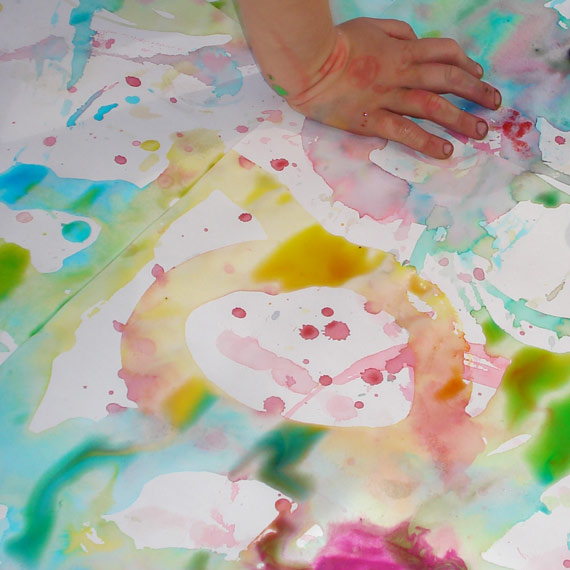
Preschoolers will enjoy creating a cool piece of artwork while learning about the different stages of water. Kate of minieco.co.uk shares this beautifully simple activity. Freeze a tray of ice cubes, each colored by a few drops of food coloring. (If you are concerned about artificial dyes, India Tree makes natural food colors. Or you can make your own.) Once the cubes have frozen, pop them out of the trays and get creative! This activity is a great way to expose kids to how colors mix to make other colors. What happens when they paint with a red ice cube over a yellow spot?
Kate recommends laying out lots of paper, since this activity can get messy. Also, you can prevent stains on little hands by rubbing on a little moisturizer beforehand. For very young kids, who may to eat the ice, try plain ice cubes on dark paper. They will still get the sensation of the ice and the dark paper will show wet spots easily.
School-Aged Child
Ice Cream in a Bag
The Living Healthy Mom shares a fun ice cream recipe that is sure to keep you cool. This activity will help your kids practice measuring. It's also a great way to avoid artificial colors and flavors you may find at the local ice cream shop. If you have ever seen Superman ice cream ... ahem … on its way out, you know what I mean.
- Add 1 cup milk, 3 tablespoons sugar, and 1 tsp. vanilla to a small zipper storage bag and seal it.
- Place ice and rock salt in a larger zipper bag.
- Put the smaller bag inside the larger zipper bag with the ice and rock salt. Seal the bag.
- Shake the two bags until the ice cream freezes to your desired consistency. This should take about 15 minutes. If your child finds the bag too cold to hold, insulate it with a hand towel.
**Bonus: With older kids, discuss why the salt helps the ice cream to freeze. Hint: The salt lowers the freezing point of the ice.
Older Child (10+)
Build a Solar Oven
Too hot to cook inside? Hot, sunny days are a perfect opportunity to cook outside and learn about solar energy. Going-Green-Challenge.com provides detailed plans for building a solar oven. The project uses a pizza box, shoe box, or shipping box; aluminum foil; black construction paper; a skewer or dowel; and plastic wrap. You will also need some basic household tools. The original instructions are quite involved, and I wouldn't do them justice to summarize, but you can find everything you need to know here: http://www.going-green-challenge.com/solar-oven-for-kids.html. Going-Green-Challenge lists five solar cooker recipes to try, including mini pizzas and s'mores. What other delicious dishes could you cook by sunlight?
**Note: This project requires the use of a box cutter, and will need the help of an adult.
Labels:
activities,
education,
homeschooling,
Mandi,
public schooling,
sunday school,
unschooling,
weather
Sunday, June 26, 2011
Sunday School: Kids in the Kitchen
Kids can learn so much from working in the kitchen with you. Besides basic cooking skills, they can learn social skills, math and culture. Try some of these activities on a rainy summer day, or any time you hear "Mom, I'm bored!" Not only can you keep your kids occupied, but you will end up with fun snack too!
ToddlerAs with most subjects, toddlers do not need a structured activity. They do best when simply allowed to explore, and the kitchen is full of sensory experiences! Let them cut soft fruits or cooked vegetables with a butter knife or children's knife. They also love stirring bowls and sprinkling cheese. Claire Battersby of Clever Toddler Activities recommends playing a "your turn, my turn game" while cooking to teach the concept of social give and take.
Preschooler
Sensational Sorter
Use a muffin tin to teach sorting and counting. Set your child up with a 6-cup muffin tin. Have her sort a pile of small items (pennies, buttons, nuts, etc.) into the cups (original author Jean Warren recommends 4-6 of each item). You can also teach counting by lining the cups with paper liners. On each cup, write a number from 1 through 6. Have your child place the corresponding number of items into each cup.
**Bonus idea** To involve more senses, blindfold your child and have her sort different small food items by taste or smell.
School-Aged Child
Sequence Sandwich
This activity will help your child learn critical thinking and the steps in a process (sequencing). Give your child a pencil and paper and have her write down, in order, the instructions for making a peanut butter and jelly sandwich. Have her write them for someone who has never made a peanut butter and jelly sandwich before. Remind her not to leave out one step! Then try to make the sandwich following your child's directions to the letter (or have another child try it). Do not do anything that she has not specifically written down. Things can get silly at this point. Did she forget to have you open the peanut butter jar? Act confused. Did she tell you to use a knife to spread the peanut butter? If not, use your fingers. Then, have her change your directions so they are complete.
Older Child (10+)
Family Cookbook
If they have been helping in the kitchen for several years, children will likely have a collection of favorite recipes. Help your child look up his favorite recipes and record them in his own family cookbook. Give him a blank scrapbook, magazines for clipping pictures, glue, scissors, and any other supplies he might need to personalize his cookbook. If you like, you can also re-use an old book and design the family cookbook as an altered book. This is a great way to talk about family traditions. Discuss your family's culture and how the recipes were passed down. Or, take a global perspective and explore recipes and cultures from all around the world.
Kitchen clipart Copyright Lila* Star, The Spiritual Woman Ltd.
Labels:
activities,
education,
homeschooling,
Mandi,
preschooler,
sunday school,
toddler,
unschooling
Tuesday, June 21, 2011
To Homeschool or Public School
As my daughter gets older, the closer we get to the decision everyone seems to be pushing us toward.
When will she be enrolled in Kindergarten?
You can only lead people on for so long without actually deciding.
The choices seem so endless and terrifying. This isn't just a choice deciding on what's for dinner. This involves my child's learning. Her growth, her development, how she sees the world.
And I understand I don't really have that much control in any of that, but the idea that my choice in how to school her or not school her makes me clam up and worry.
I've researched homeschooling and public schooling and unschooling. I've read everything. I've tried planning lessons or just letting her do her own thing. And then my amazing daughter will hit me with a curve ball.
She was watching a cartoon, and I can't even remember which one. As we are watching, they go to school in a yellow school bus and she got so excited. She told me that she couldn't wait to ride in one and go to school.
Everything I'd learned, everything I had thought I knew, the decision I was so close to making, all of it went up in smoke. My daughter doesn't know what she wants, she just sees these shows and hears talk about going to school and that's all she can think about. I feel unable to breathe.
So do you go with what your child sees on television and wants to do, or do you go with your gut about what would be best for your child?
My husband is severely dyslexic, and I have always been worried our children would have it. Now, most people have some form of dyslexia, but the idea of my child not being able to read because of a decision on how to school her is daunting.
Sending her to a school that is overcrowded with teachers that can't spend time with her one on one is one of the big reasons I want to homeschool. But, if she has a great teacher, thrives in the environment with other children, would I be making the wrong choice to keep her home and teach her myself?
Has anyone else struggled with this choice? Any sites or books or even insight to help would be amazing.
This decision is so much harder than I thought it would be.
When will she be enrolled in Kindergarten?
You can only lead people on for so long without actually deciding.
The choices seem so endless and terrifying. This isn't just a choice deciding on what's for dinner. This involves my child's learning. Her growth, her development, how she sees the world.
And I understand I don't really have that much control in any of that, but the idea that my choice in how to school her or not school her makes me clam up and worry.
I've researched homeschooling and public schooling and unschooling. I've read everything. I've tried planning lessons or just letting her do her own thing. And then my amazing daughter will hit me with a curve ball.
She was watching a cartoon, and I can't even remember which one. As we are watching, they go to school in a yellow school bus and she got so excited. She told me that she couldn't wait to ride in one and go to school.
Everything I'd learned, everything I had thought I knew, the decision I was so close to making, all of it went up in smoke. My daughter doesn't know what she wants, she just sees these shows and hears talk about going to school and that's all she can think about. I feel unable to breathe.
So do you go with what your child sees on television and wants to do, or do you go with your gut about what would be best for your child?
My husband is severely dyslexic, and I have always been worried our children would have it. Now, most people have some form of dyslexia, but the idea of my child not being able to read because of a decision on how to school her is daunting.
Sending her to a school that is overcrowded with teachers that can't spend time with her one on one is one of the big reasons I want to homeschool. But, if she has a great teacher, thrives in the environment with other children, would I be making the wrong choice to keep her home and teach her myself?
Has anyone else struggled with this choice? Any sites or books or even insight to help would be amazing.
This decision is so much harder than I thought it would be.
Labels:
homeschooling,
Kayce,
parenting,
public schooling,
unschooling
Sunday, May 1, 2011
Sunday School: A Walk in the Woods

Welcome to the Connected Mom Sunday School. No matter what the course of your child's education, be it unschooling, homeschooling, or conventional schooling, The Connected Mom Sunday School aims to provide you with fun and easy activities for children of all ages and stages. (Have an idea for a Connected Mom Sunday School activity or theme? Either comment below or send your idea to connectedmom (dot) julian (at) gmail (dot) com.)
For those of us living in the Northern Hemisphere, spring has finally sprung. My family is eager to get outside, and one of our favorite outdoor activities is a hike in the woods. A hike presents all sorts of learning opportunities. Certainly, a walk in the woods is great exercise and provides opportunities to observe and experience nature. The woods also makes an interesting backdrop for learning about other subjects, like history and art.
Toddler:
Nature Sounds
Most toddlers cannot walk for a very long time, so allow plenty of time to stop and rest. Take advantage of one of these stops to play this sound awareness game. Sit quietly and have your toddler close his eyes and hold up a fist. Each time he hears a different sound, have him hold up one finger. When he has heard five different sounds, have him open his eyes. Then, share the different sounds you heard. This is a great way to practice counting, but if your toddler is not yet counting, just quietly listen to the sounds.
Preschool:
On the Right Track

Before you go on your hike, learn about the different types of tracks that animals make. Check out books from your local library, or look at websites like Beartracker's Animal Tracks Guide. When you go, take along a printout of different animal tracks for comparison. Have your child keep her eyes on the ground as you walk, looking for tracks. If you are having trouble finding tracks, you try looking for droppings--tracks will not be far behind! Compare the tracks to your reference sheet. You may also want to take a notepad and pencil to draw pictures of any tracks you cannot identify so you can research them at home. We found that this activity works especially well right after a rain, when the ground is slightly muddy.
**Bonus activity: While your child is looking for tracks, she may also find trash. Take a small bag and encourage her to pick up any litter she finds along the trail.**
School-aged child:
Greetings on The Trail Practice handwriting and show concern for the environment at the same time! Some people leave messages by carving into rocks or trees, but that permanently damages the natural setting. Instead, have your child scratch a greeting into the soil with a stick. He could warn other hikers of perils ahead (e.g. "slippery rock"), or just leave a friendly hello. If the soil is too hard, moisten it with some fresh, clean water. This activity could also lead into a history lesson about how early people wrote by pressing objects into clay (cuneiform) or carving into stone.
Older child (10+):
Environmental ArtAccording to greenmuseum.org, environmental art is "art that helps improve our relationship with the natural world." Many environmental artists use natural elements such as sticks, stones, leaves and soil to create art like the Andy Goldworthy work pictured at the right. Once completed, these "ephemeral" works are left in nature to transform along with the environment.
Your child can learn more about this art movement by making her own work of environmental art. For inspiration, study the works of environmental artists. If you can obtain a copy, watch Andy Goldsworthy's Rivers and Tides, a film that follows the artist at work. Nils Udo and the Red Earth group create similar art. Take a sketchbook, pencil, and camera along on your hike. Allow your child to take in the setting and find elements that she would like to use. Give her time to sketch a design and lay it out. Once the design is complete, take a photo (or several) to preserve it. Leave the work to disappear back into the environment.
To find trails in your area, see these websites for trails in the US or worldwide. Have fun learning on the trail!
Labels:
activities,
education,
fitness,
homeschooling,
Mandi,
sunday school,
toddler,
unschooling,
walk
Wednesday, September 15, 2010
School's Out Forever
![]() |
| ABC's The Middle |
The mother's closing voice-over intoned how hardworking people with average kids trying to get by and help them grow up isn't ordinary, but extraordinary. It's not a horrible sentiment, but I wonder who relates to this show. Mostly because the characters' are social skills cringe-worthy. In another episode, the mother sends the youngest, an isolated book worm, to social skills classes to prove to the father how his poor social skills are affecting his son. And all I could hear as I watch this was my mother-in-law demanding to know how our children would be socialized if we homeschooled.
Now this is not a mother-in-law bashing article. I like my mother-in-law. She's an educator by trade. I taught before I decided to stay home. I have deep respect for education. I love teaching. I just happen to believe sitting at a desk with thirty other kids and a set schedule isn't going to do as much as I could for them by homeschooling. But inevitably the question I am repeatedly asked is how I can expect to socialize my children.
Well, if your only image of homeschoolers involves awkward, unfashionable kids with stern, conservative parents, you're missing out. Anyone who knows me understands I'm a diva-hippie-rockstar cross breed of a mom (at least that's what I'm going for), but that's not the point. Tonight as I watched The Middle, I watched this girl struggling to make a friend and find a spot to fit into and I sort of wondered how my children will be socialized if they attend school. Is it really so desirable to help them achieve status quo amongst a group of kids from roughly the same income, same racial groups, and same neighborhoods? What do we learn from merely fitting into a puzzle comprised of too similar pieces? And what about those awkward kids struggling to achieve even that? What does school socialization accomplish for them?
Labels:
advocacy,
education,
homeschooling
Wednesday, June 2, 2010
The First of Three Conversations: Unschooling?
The subject of our children's education has come up a lot recently. We are considering moving and often the possible location comes down to the school district, which inevitably leads to these words escaping my lips, "I could homeschool." My husband knows exactly what this means - I want to homeschool, and I'm slowly getting him used to the idea. And as always, he is supportive with one caveat - he's concerned about my organization. To be honest, I am as well. In my mind, I have 2 years before I have to get started, but let's face it there is no start date when you educate at home. So I have started thinking about it, picking up books, etc.
One of the issues I am most interested in is homeschooling v. unschooling. I have a hard time setting a strict curriculum and yet, the idea of completely going with the flow is daunting. Initially I perceived unschooling as homeschooling without the rigid structure of a homeschool curriculum, but this segment on ABC got me thinking: Unschooling: No Tests, No Books, No Bedtime
I'm not thrilled with the incredibly negative undertone to the piece, but I'll admit that I understand the skepticism. The Martins certainly didn't meet my expectation of unschooling. Now it could be the poor journalism at play, but it strikes me that this radical form of unschooling may prove as detrimental as the hidden curriculum of traditional schooling. The featured family promotes no discipline, no structure, and no schooling, arguing that children don't learn best when rigidly structured. I agree and disagree.
I don't think this is the best way for kids to learn. Sitting in desks, reading the same books, completing workbooks, and watching videos. I know because I used to try to teach those kids, and, as Wendy Priesnitz points out, "the reality is that (contrary to what most people prefer to believe) even school kids decide what they want to learn and when. They can’t help it; it’s a prerequisite of learning. Oh, they might memorize some stuff in order to pass a test or otherwise regurgitate on demand, but that’s not learning." Putting 30+ kids in a small room and throwing info at them doesn't really teach them much. Expecting that you can create a structured curriculum that meets the learning needs of every student is foolish. Educators know they don't teach every student their classroom, because interest in any particular subject or lesson has to be intrinsically driven at least in part. I can have the most fascinating lesson plan ever planned. It can engage 19 out of 20 students, but one will still be daydreaming or texting, or drawing in a notebook.
But do we throw structure out completely as in the above segment? No. Structure does not mean rigidity. It means foundation. We can allow our children to explore their interests within a simply structured education - planning activities, participating in co-ops, creating "lessons" based on their interests. There is no need to buy an entire homeschool series or give home tests on biology. But it is imperative that we educate our children according to their needs and interests.
My own interest in unschooling and self-education is practical. My college experience was spent exploring different subjects, taking a smattering of this and that. My husband, possibly the most intelligent person I know, got a useless degree in a subject that was interesting to him at the time. If we had approached college with a stronger sense of self and a greater level of experience in the world, we might not have squandered those years. College shouldn't be the first time a person exerts true control over their education. It's too damn expensive for one thing. All that said, I probably still wouldn't have wound up with a practical degree but I would have rounded out my education to better encompass my interests. College is essentially paying for unschooling after all, which is probably why so many walk away without degrees or, worse yet, liberal arts degrees.
So as the country engages in a debate over the validity of unschooling, I'd argue the heart of the problem lies both in the labels and the expectations. The very term unschooling is problematic, because the prefix "un" can mean non as well as indicate a reversion. So are we nonschooling our children, or are we trying to undo our own educations? Our own educational baggage can play a role in the decision to unschool but it shouldn't dictate their actual education. Taking charge of a child's education is a huge responsibility. As a former teacher, I wanted the best for all my students. I wanted them to stand on their desks and proclaim their admiration for my sacrifices with Whitman. And every year I was rewarded with a few students I really reached. I only reached them because they were open to the subject though. I expect the backlash against unschooling we see from the media and main stream society is directly related to this responsibility and pressure.
I suspect more people want a better education for their children and recognize that schools are failing them, but taking on a child's education is no small matter. There are jobs and paychecks and bills that all seem to come first. After all, we don't want to be unhoming. But at the end of the day, the majority of us could choose to teach our children but it requires sacrifice of time, money, ourselves if we are to do it right. Would you be willing to give up a family vacation or drive an old car to stay home and teach your kids? Probably not, because we have been programmed to believe kids belong in school and we belong at work so we can live the dream of owning our own cookie cutter house in the suburbs. And while we do this we complain about hating our jobs and cubicles and mourn the what-if's of our lives, and what we need to recognize is that this is all part of the same vicious cycle of institutionalization. You are teaching your children regardless of how they are schooled. We are telling them where to fit, but what if we could teach them to carve a space for themselves that was uniquely theirs? What if we could break the cycle of institutionalization and inspire individuality thus allowing our children truly fulfilling lives? This should be our motivation when considering our children's educations. And it will involve structure and sacrifice, but it will be worth it.
Disclaimer: I have two liberal arts degrees.
One of the issues I am most interested in is homeschooling v. unschooling. I have a hard time setting a strict curriculum and yet, the idea of completely going with the flow is daunting. Initially I perceived unschooling as homeschooling without the rigid structure of a homeschool curriculum, but this segment on ABC got me thinking: Unschooling: No Tests, No Books, No Bedtime
I'm not thrilled with the incredibly negative undertone to the piece, but I'll admit that I understand the skepticism. The Martins certainly didn't meet my expectation of unschooling. Now it could be the poor journalism at play, but it strikes me that this radical form of unschooling may prove as detrimental as the hidden curriculum of traditional schooling. The featured family promotes no discipline, no structure, and no schooling, arguing that children don't learn best when rigidly structured. I agree and disagree.
I don't think this is the best way for kids to learn. Sitting in desks, reading the same books, completing workbooks, and watching videos. I know because I used to try to teach those kids, and, as Wendy Priesnitz points out, "the reality is that (contrary to what most people prefer to believe) even school kids decide what they want to learn and when. They can’t help it; it’s a prerequisite of learning. Oh, they might memorize some stuff in order to pass a test or otherwise regurgitate on demand, but that’s not learning." Putting 30+ kids in a small room and throwing info at them doesn't really teach them much. Expecting that you can create a structured curriculum that meets the learning needs of every student is foolish. Educators know they don't teach every student their classroom, because interest in any particular subject or lesson has to be intrinsically driven at least in part. I can have the most fascinating lesson plan ever planned. It can engage 19 out of 20 students, but one will still be daydreaming or texting, or drawing in a notebook.
But do we throw structure out completely as in the above segment? No. Structure does not mean rigidity. It means foundation. We can allow our children to explore their interests within a simply structured education - planning activities, participating in co-ops, creating "lessons" based on their interests. There is no need to buy an entire homeschool series or give home tests on biology. But it is imperative that we educate our children according to their needs and interests.
My own interest in unschooling and self-education is practical. My college experience was spent exploring different subjects, taking a smattering of this and that. My husband, possibly the most intelligent person I know, got a useless degree in a subject that was interesting to him at the time. If we had approached college with a stronger sense of self and a greater level of experience in the world, we might not have squandered those years. College shouldn't be the first time a person exerts true control over their education. It's too damn expensive for one thing. All that said, I probably still wouldn't have wound up with a practical degree but I would have rounded out my education to better encompass my interests. College is essentially paying for unschooling after all, which is probably why so many walk away without degrees or, worse yet, liberal arts degrees.
So as the country engages in a debate over the validity of unschooling, I'd argue the heart of the problem lies both in the labels and the expectations. The very term unschooling is problematic, because the prefix "un" can mean non as well as indicate a reversion. So are we nonschooling our children, or are we trying to undo our own educations? Our own educational baggage can play a role in the decision to unschool but it shouldn't dictate their actual education. Taking charge of a child's education is a huge responsibility. As a former teacher, I wanted the best for all my students. I wanted them to stand on their desks and proclaim their admiration for my sacrifices with Whitman. And every year I was rewarded with a few students I really reached. I only reached them because they were open to the subject though. I expect the backlash against unschooling we see from the media and main stream society is directly related to this responsibility and pressure.
I suspect more people want a better education for their children and recognize that schools are failing them, but taking on a child's education is no small matter. There are jobs and paychecks and bills that all seem to come first. After all, we don't want to be unhoming. But at the end of the day, the majority of us could choose to teach our children but it requires sacrifice of time, money, ourselves if we are to do it right. Would you be willing to give up a family vacation or drive an old car to stay home and teach your kids? Probably not, because we have been programmed to believe kids belong in school and we belong at work so we can live the dream of owning our own cookie cutter house in the suburbs. And while we do this we complain about hating our jobs and cubicles and mourn the what-if's of our lives, and what we need to recognize is that this is all part of the same vicious cycle of institutionalization. You are teaching your children regardless of how they are schooled. We are telling them where to fit, but what if we could teach them to carve a space for themselves that was uniquely theirs? What if we could break the cycle of institutionalization and inspire individuality thus allowing our children truly fulfilling lives? This should be our motivation when considering our children's educations. And it will involve structure and sacrifice, but it will be worth it.
Disclaimer: I have two liberal arts degrees.
Labels:
advocacy,
education,
homeschooling,
jenn,
unschooling
Thursday, May 6, 2010
Kid's dream playroom - inspiration board
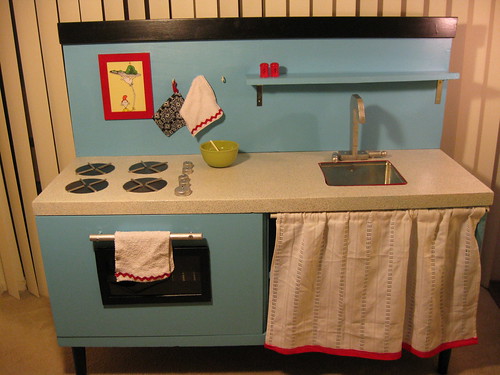
Last summer, I started working on a lot of handmade toys for James. Then I got pregnant and morning sickness took over our lives. So here is my inspiration board for our play room. Maybe I can undo the tv addiction and encourage more creative play :)
From Out of the Crayon Box
From Homemade by Jill
Lots of fun food
A felt play house
Like from This & That
more to come :)
From Out of the Crayon Box
From Homemade by Jill
Lots of fun food
A felt play house
Like from This & That
more to come :)
Labels:
creative play,
education,
homeschooling
Subscribe to:
Posts (Atom)